How a full width chase cover and hip style chimney cap protect a Dallas chimney from rain and animals
 EmilyOctober 19, 20265 mins
On this page
If you have ever stood in your driveway and squinted up at the top of your chimney, you have probably noticed there is something up there, but you could not tell me what it is or whether it is doing its job. That is normal. Most people never see the top of their own chimney. I climb onto Dallas roofs all week and I can tell you that what sits up there is the single cheapest piece of protection your fireplace has, and it is also the piece that gets ignored the longest.
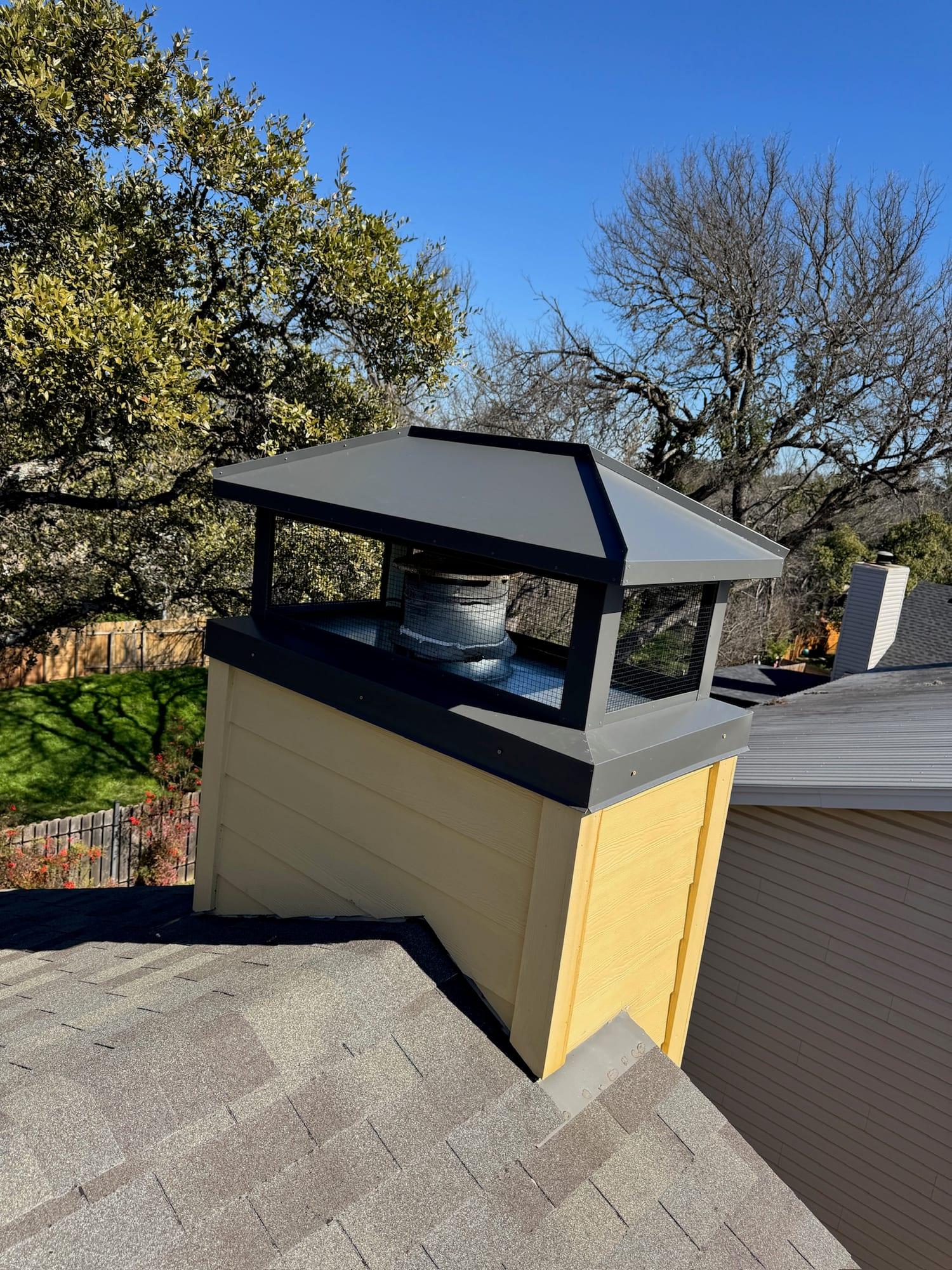
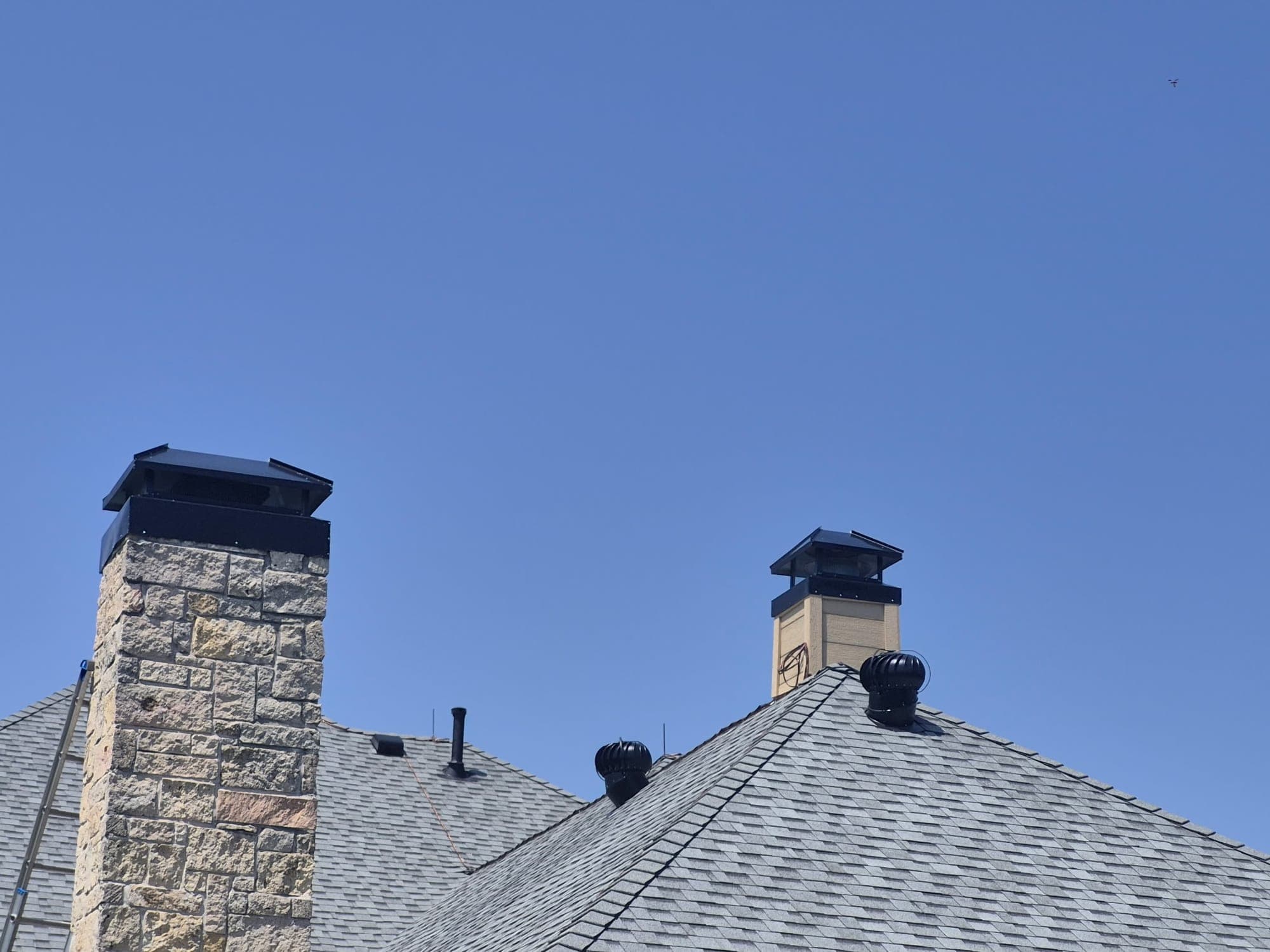
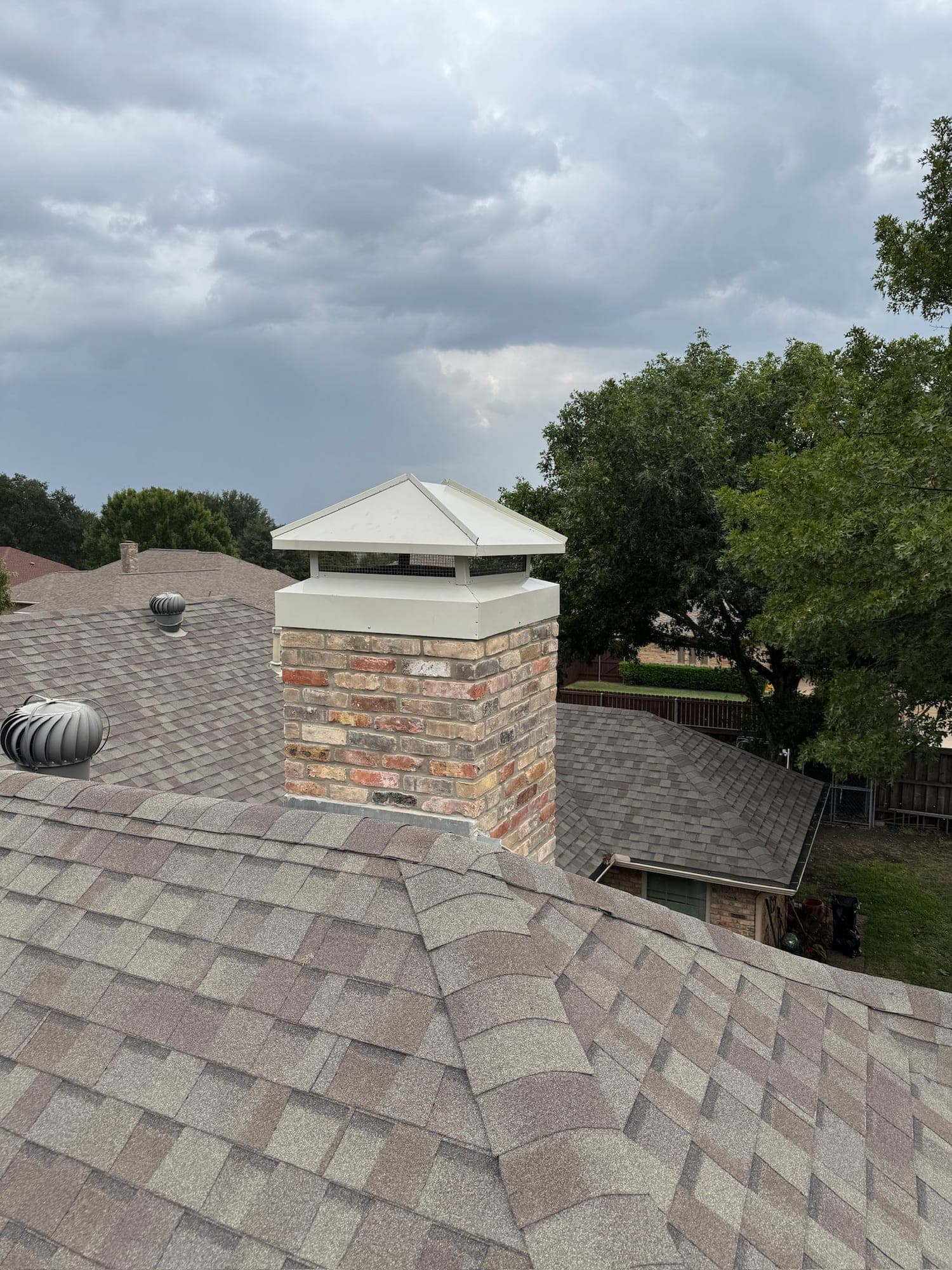
The setup you want on most masonry chimneys in this city is pretty simple: a full width cover that caps off the entire top of the chimney, and a raised hip style cap over the flue openings with mesh screening on all four sides. Picture a small metal roof sitting over the chimney, because that is essentially what it is. Rain hits the slope and runs off. Screening keeps everything with wings or claws on the outside.
Why the full width matters more than people think
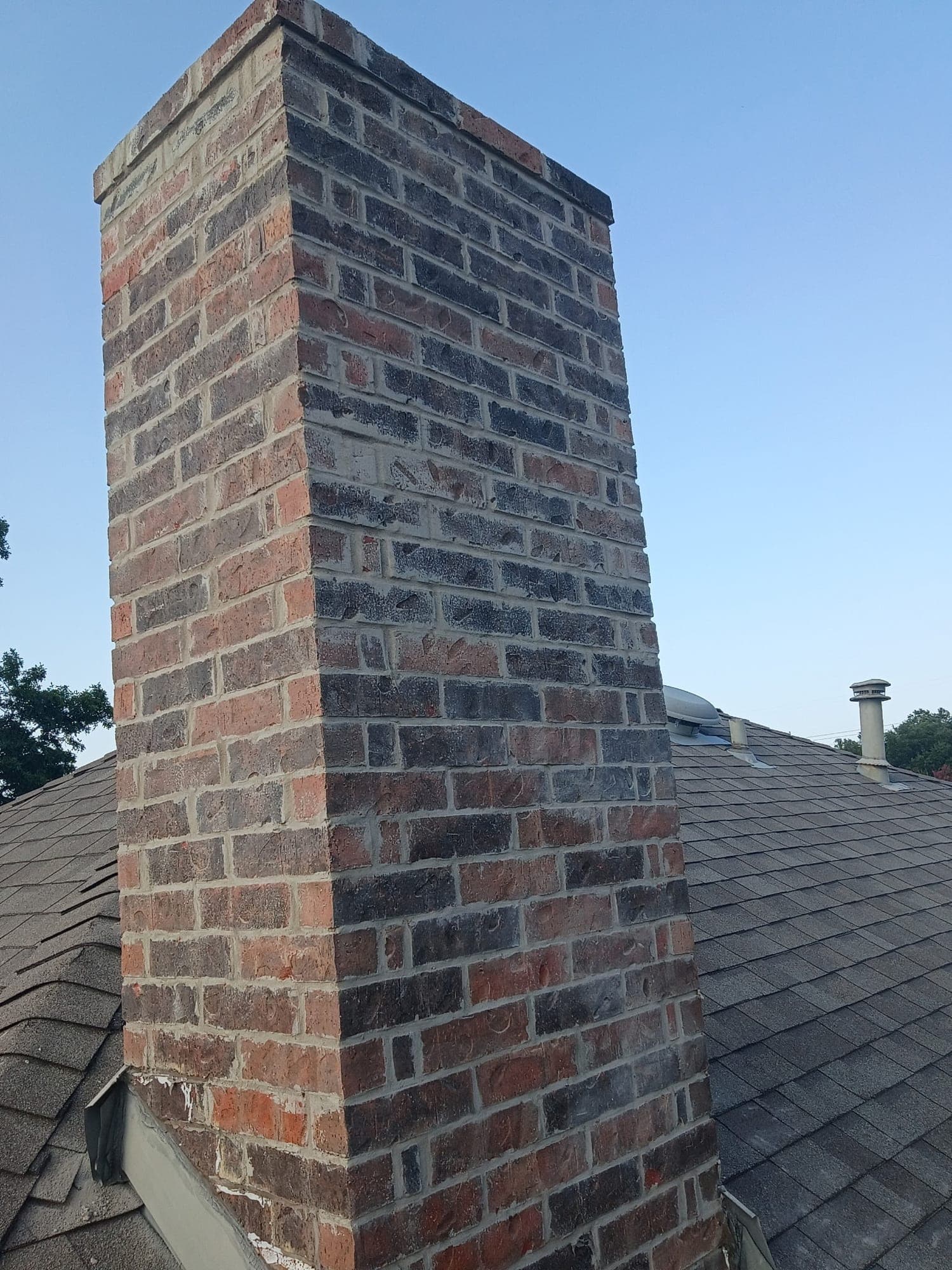
A narrow cap that only covers the flue opening leaves the whole top surface of the chimney exposed. On a brick chimney, that surface is the crown, and in North Texas the crown takes an absolute beating. We swing from 105 degrees in August to a hard freeze in January, sometimes within the same week in February. Concrete expands, contracts, and hairlines open up. Then the rain comes, soaks into those cracks, and works its way down into the brick and mortar below.
A full width chase cover (sometimes called a full coverage cover or a multi flue cover, depending on how many flues are underneath) sits across the entire top with edges that overhang the brick. Water never touches the crown. It hits metal, runs to the edge, and drips clear of the masonry. On the older homes around Lakewood and Swiss Avenue with original brickwork, that one detail can add decades to the life of a chimney. We wrote about how crumbling mortar gets worse with every freeze cycle, and almost every case starts the same way: water that had a free path into the top of the chimney.
What the cover is made of matters too
Galvanized steel is what builders used for years, and it rusts. If you see rust streaks running down the brick face of your chimney, that is your cover telling you it has failed. Stainless steel and aluminum hold up far better in our humidity, and a good one gets a cross break or a slight pitch so water does not pond in the middle. A flat cover with standing water on it is a cover that will rust through from the inside out.
The hip style cap and what the mesh is actually for
The raised cap over the flue does two jobs at once. The sloped hip shape sheds rain and keeps it from dropping straight down the flue onto your damper and smoke shelf. The screening on the sides keeps animals out while still letting smoke and combustion gases escape freely.
Animals are not a small problem here. Chimney swifts show up in spring and they are federally protected, which means once they nest you legally cannot remove them until the young have fledged. Squirrels are year round. Raccoons will tear through an undersized screen to den in a warm flue. If you live anywhere near the tree canopy around White Rock Lake or the older lots in Preston Hollow, your chimney looks like a hollow tree to every animal in the neighborhood. I have covered what happens when a flue sits open through nesting season in more detail, and the cleanup is always worse than the prevention.
Screen size is a real decision
Too coarse and squirrels squeeze through. Too fine and creosote plus ash start to glaze the mesh shut, which chokes your draft and pushes smoke back into the room. Most of the time a mesh in the half inch to three quarter inch range is the sweet spot for a wood burning flue. Gas appliances can sometimes use a finer screen, but it still needs checking, because gas puts moisture and acidic byproducts up that flue whether you see soot or not.
What rain actually costs you when the top is open
Water coming down an uncapped flue does not stay in the flue. It rusts the damper until it will not swing. It soaks the firebox. It eats the mortar joints inside the chimney where nobody can see them. Mixed with creosote, it makes an acidic sludge that chews through clay tile liners. And eventually it shows up as a stain on the ceiling drywall next to the chimney, at which point the homeowner calls a roofer, and the roofer finds nothing wrong with the roof. If that story sounds familiar, our piece on where chimney water intrusion actually comes from walks through the usual suspects.
How to know what you have up there
You can learn a lot from the ground with a pair of binoculars. Look for rust staining, a cover that is only sitting over the flue tile instead of the whole top, missing screws along the edge, a dented or lifted corner, or no cap at all. What you cannot see from the driveway is the condition of the crown underneath, the mortar joints near the top, or whether the flue tiles are cracked.
That is where a proper look pays for itself. A technician on the roof during a chimney inspection can tell you whether your existing cover can be reused, whether the crown needs sealing first, and what size cover the chimney actually takes, since almost every one of these is built to measurement rather than pulled off a shelf. If replacement is the answer, we build and install chimney caps and chase covers sized to the chimney rather than forced to fit.
October is when every Dallas homeowner remembers the fireplace at the same time, so if you want this handled before the first real cold front rolls down 635, now is the time to schedule a Dallas chimney inspection and find out what is actually on top of your chimney.
Common questions
Most chase cover and cap replacements in the Dallas area fall somewhere in the range of a few hundred dollars for a simple single flue cap up to roughly two thousand for a large custom stainless or copper multi flue cover. The spread comes from size, number of flues, metal choice, roof pitch and access. Covers are fabricated to measurement rather than bought off a shelf, so an accurate price requires someone measuring the chimney top.
A chimney cap sits over the flue opening itself and usually has a sloped top with mesh screening on the sides to block rain, animals and embers. A chase cover is the larger flat panel that covers the entire top surface of the chimney or chase, with edges that overhang so water runs clear of the brick or siding. Many chimneys need both working together, since each one protects a different area.
A simple single flue cap that clamps onto an exposed flue tile is within reach for a confident homeowner with safe roof access. The risks are real though. Steep composition roofs are slick, a cap that is not fastened properly can blow off in a North Texas storm, and the wrong mesh size can restrict draft and push smoke into the room. Full width chase covers almost always need custom fabrication to exact measurements.
If the birds are chimney swifts, which are common in Texas from spring through late summer, they are protected under federal law and cannot be removed while nesting. You have to wait until the young fledge and leave on their own, usually within a few weeks. Keep the damper closed so nothing enters the house. Once the flue is empty, have it swept and capped with proper mesh screening so the situation does not repeat next season.