The mesh spark arrestor screen on a chimney cap and what it keeps out of the flue
 AnastasiaNovember 16, 20265 mins
On this page
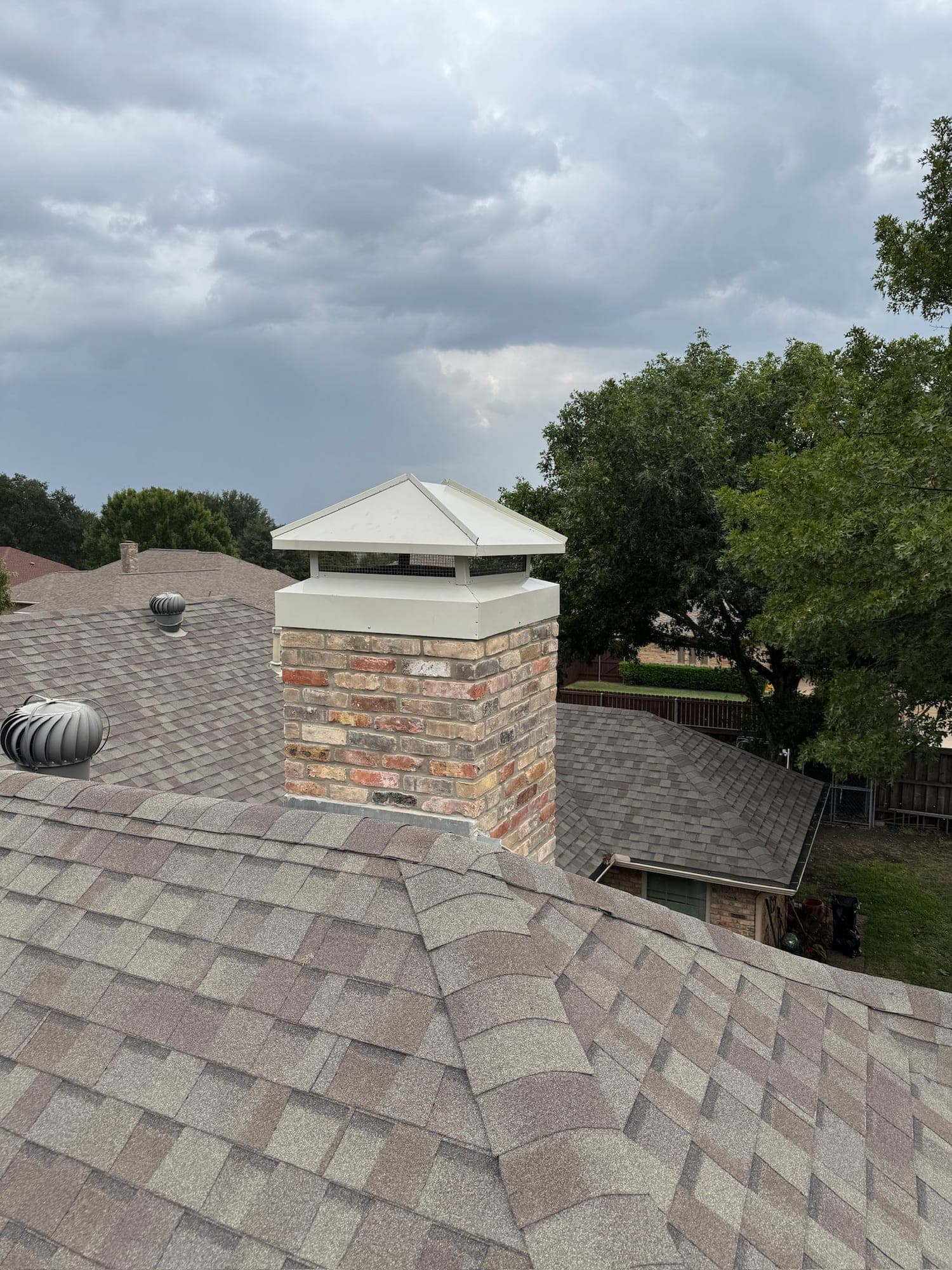
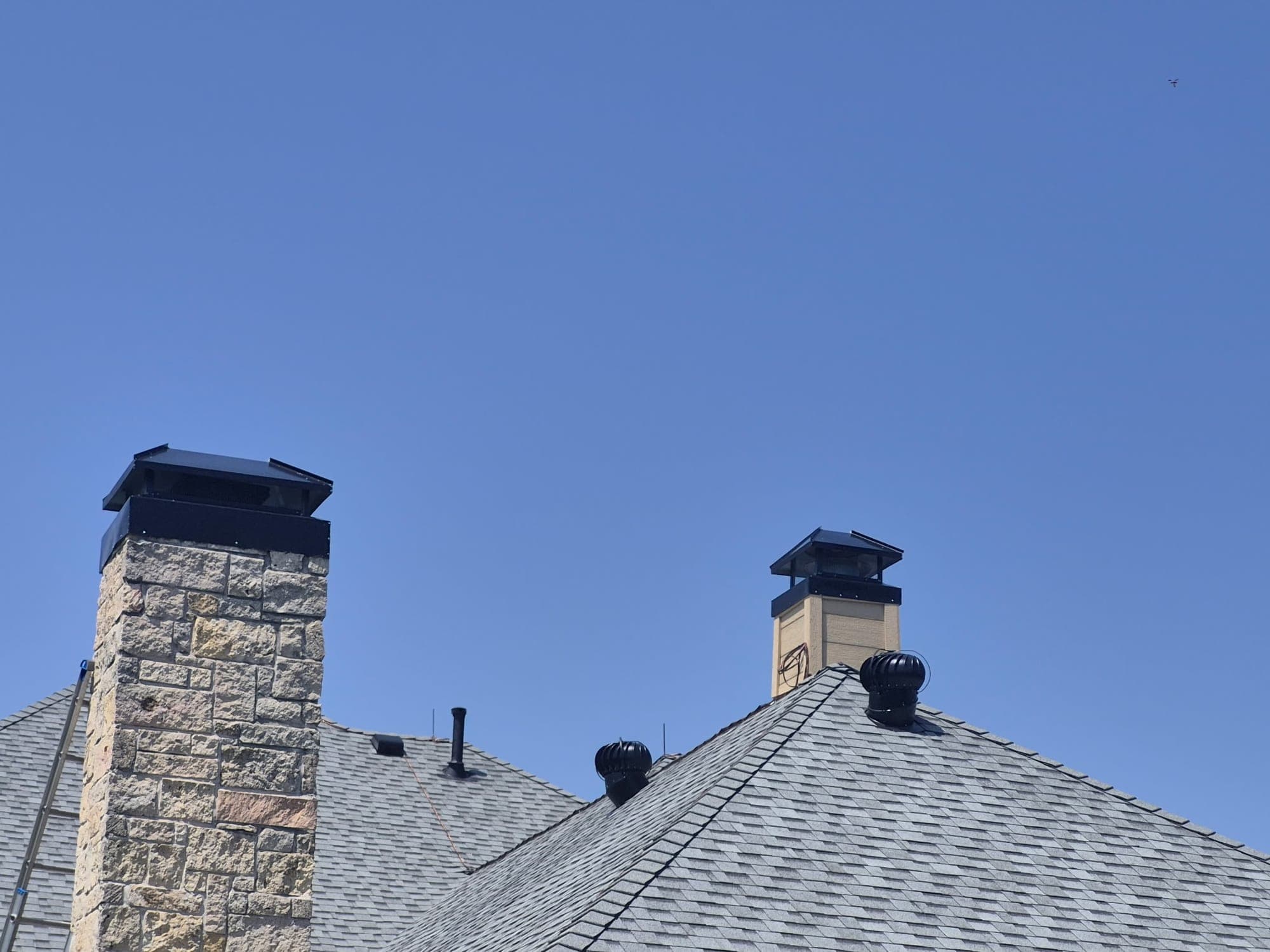
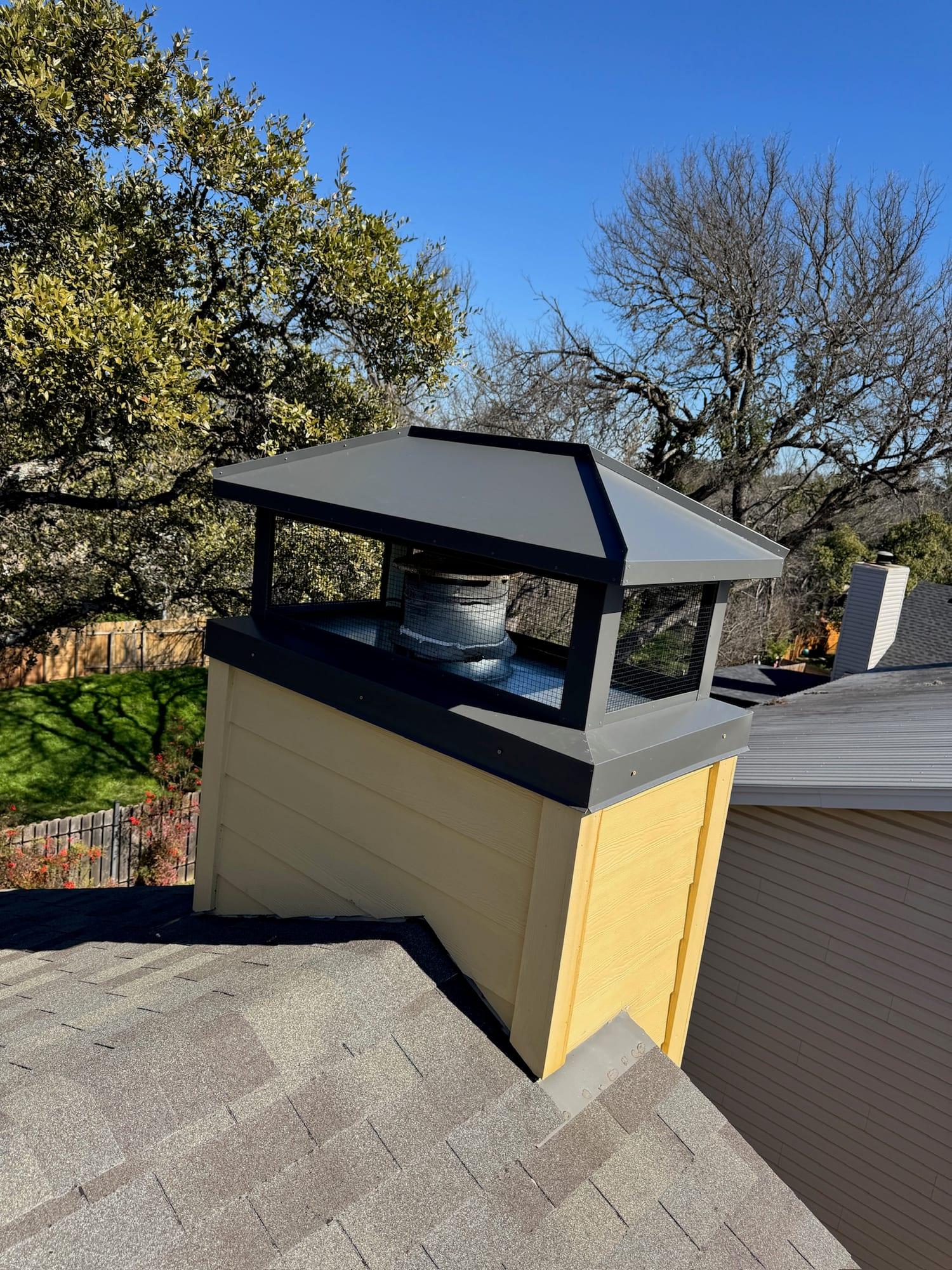
The photo at the top of this post is a pretty typical Dallas setup: a hip style cap with black trim sitting on a full width chase cover, wood siding below it, and the round metal flue pipe visible right there in the middle. What I want you to notice is the part most people look straight past. The mesh. That screening wrapped around all four sides between the cap roof and the chase cover is the spark arrestor, and for a job that small it does a surprising amount of work.
Now that burning season is opening up and first fires are happening all over town, this is the right week to understand what that screen is doing for you.
What the mesh is actually there for
The name tells you the original purpose. When you burn wood, bits of burning material get carried up the flue on the draft. Most of it is ash and it goes out cold. But a well fed fire with resinous wood can throw live embers, and a flue with creosote in it can throw bigger ones. Without a screen, those embers land wherever the wind takes them. On a composition shingle roof in October, after the kind of dry stretch we get here, that is not a theoretical problem.
The mesh catches them. A spark leaves the flue, hits the screen, loses its momentum and burns itself out in the open air instead of landing in your neighbor's gutter. That is the whole trick. It is simple, it is passive, and it works as long as the mesh is intact and not choked with soot.
Why the opening size matters
Standard spark arrestor mesh runs around three quarters of an inch, which is big enough to let smoke and flue gases pass without strangling the draft, and small enough to stop an ember and keep most animals out. Go finer than that and you start trading away draft, especially on an older masonry flue that was never a strong drafter to begin with. Go coarser and you have a decorative cage, not an arrestor. There is a reason the standard sits where it does, and it is worth checking that whatever is on your chimney actually meets it rather than being a piece of hardware cloth somebody zip tied on.
What else that screen keeps out
Spark control is the name on the box. Around here, the screen earns its keep mostly by keeping things from coming in.
Birds, squirrels and whatever else is house hunting
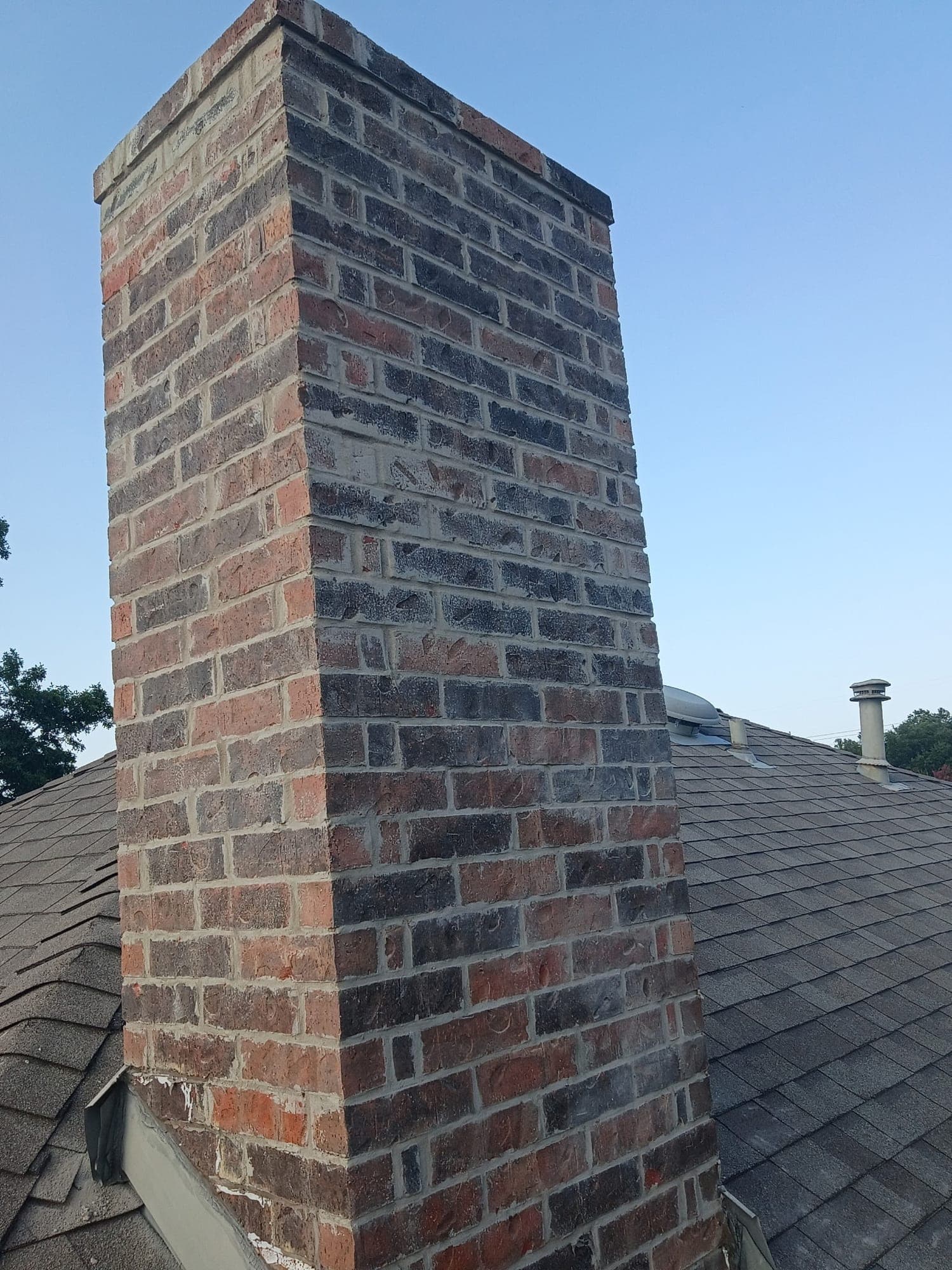
An open flue is a perfect hollow tree. In the older neighborhoods around Lakewood and the M Streets where the canopy sits right over the rooflines, squirrels treat an uncapped chimney as a vacancy. Chimney swifts nest in flues too, and once they are in during nesting season you cannot legally remove them until the birds have fledged. The mesh ends that conversation before it starts. We wrote about why an uncapped flue invites birds and squirrels if you want the longer version, including what it costs you when they win.
Leaves and debris off the trees
Anybody with pecans or live oaks hanging over the roof knows what late fall does to gutters. The same material lands on a chimney. Without a screen it drops into the flue, piles on the smoke shelf, and sits there soaking up moisture. A flue full of wet leaf litter smells, blocks draft, and gives you a smoky room the first time you light up.
Rain, at least some of it
The cap roof over the mesh is what sheds water off the flue opening, and the screen keeps wind driven rain from blowing straight in sideways. Water in a flue is the slow killer in Dallas, not the dramatic one. It rusts dampers, breaks down mortar joints in a masonry chimney, and stains the ceiling drywall next to the fireplace. If you have seen that stain, the rundown on how water gets into a chimney covers the usual suspects beyond the cap.
How a spark arrestor fails
Mesh fails three ways, and all three are easy to see from the roof and impossible to see from the yard.
It clogs. Soot and creosote build on the screen the same way they build in the flue, and a mesh that is half glazed over chokes the draft. The symptom is smoke rolling back into the room on a fire that used to burn fine. People blame the damper or the wood. Often it is the screen.
It rusts through. Galvanized mesh in our humidity gives you a decade or so before it starts shedding. Stainless lasts far longer, which is the main reason we steer homeowners toward stainless when a new chimney cap goes on.
It gets torn open. Squirrels chew, storms bend a corner loose, and a cap that was never fastened properly lifts in a gust off a Trinity side thunderstorm. A single palm sized hole is all an animal needs.
When to look at yours
A screen you cannot see is a screen you are guessing about. A standard chimney inspection puts someone on the roof with eyes on the mesh, the cap fasteners, the chase cover seams and the flue below it. If your fireplace has been smoking, if you heard scratching above the damper last spring, or if you honestly do not know what is up there, that is the time. Burning season has just gotten started, so you can still book a chimney inspection in Dallas before the cold fronts stack up and everybody calls at once.
It is a small square of metal screen. It is also the only thing standing between your fire and your roof.
Common questions
Most residential building codes adopted in Texas require a spark arrestor on chimneys serving solid fuel appliances, meaning wood burning fireplaces and stoves. The typical requirement is corrosion resistant mesh with openings no smaller than about three eighths of an inch and no larger than about three quarters of an inch, covering the full flue opening. Gas only appliances have different rules, but a cap with screening is still a good idea to keep animals and rain out.
Replacement caps in the Dallas area generally run somewhere from a couple hundred dollars for a small single flue stainless cap installed, up to roughly a thousand or more for a large custom hip style cap sized to a full width chase cover. The spread depends on flue size, material, whether stainless or copper, and whether a chase cover is being replaced at the same time. Any honest figure requires someone measuring your actual chimney.
Yes, and it is a common cause people overlook. Soot and creosote build up on the mesh the same way they build inside the flue. When the screen glazes over, the opening for exhaust shrinks and smoke rolls back into the room instead of rising. If a fireplace that always drafted well starts smoking, have the cap screen checked along with the damper and the flue before assuming the problem is your firewood.
For a wood burning fireplace used regularly through the season, once a year is reasonable, and it normally happens as part of a routine sweep since the technician is already on the roof. Light users may stretch it longer. Homes under heavy tree cover often need it more, because leaves and seed pods collect against the mesh. If you burn unseasoned wood, expect faster buildup and check it sooner.