Chimney base flashing where the brick chimney meets the shingle roof, and why that joint matters for keeping water out
 EmilyOctober 26, 20265 mins
On this page
If you stood on your roof right now and walked up to the chimney, the thing I would want you to look at is not the brick. It is the thin band of metal running along the bottom of the stack, right where the masonry meets the shingles. That joint is the single most common place water gets into a Dallas house through a chimney, and almost nobody thinks about it until there is a stain on the ceiling.
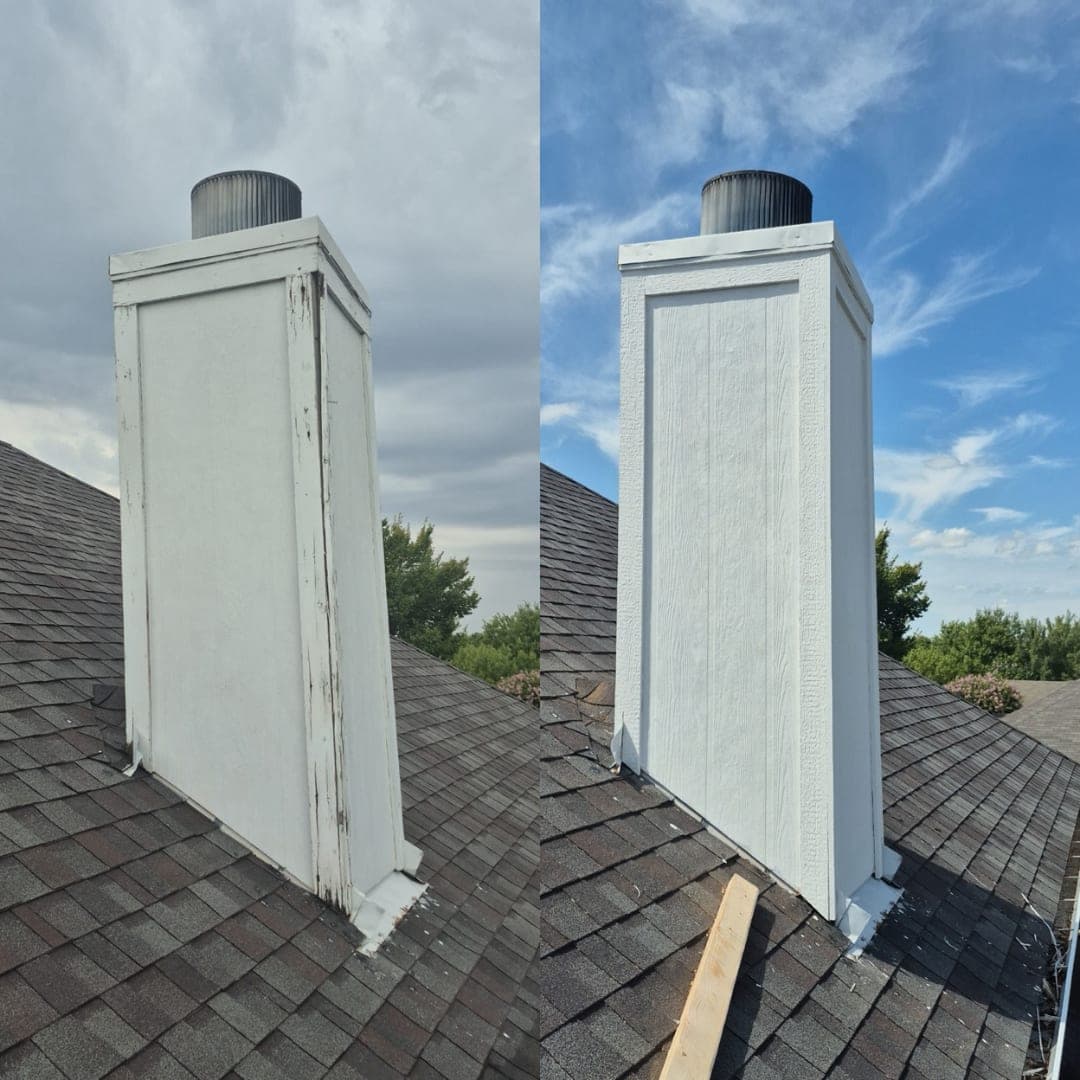
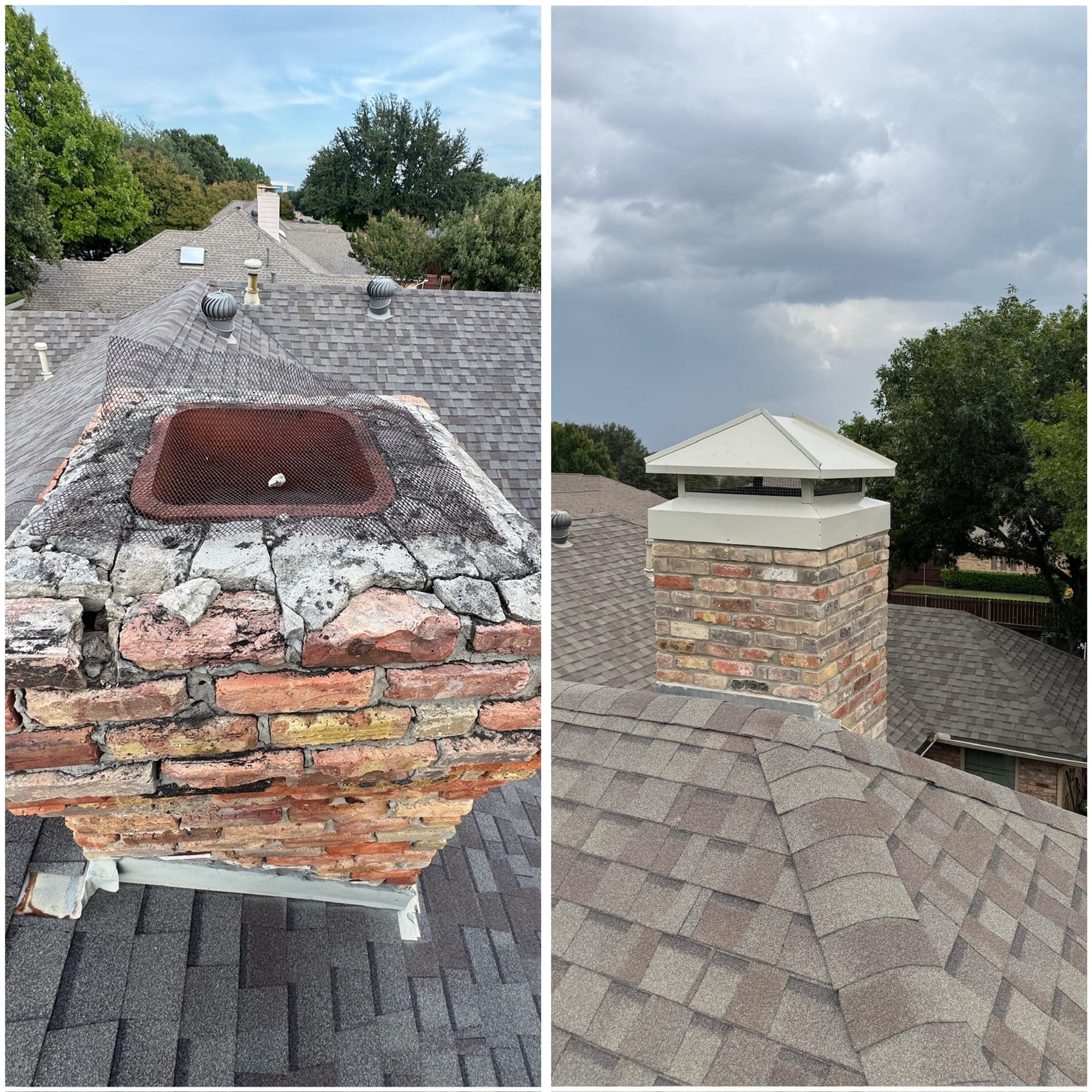
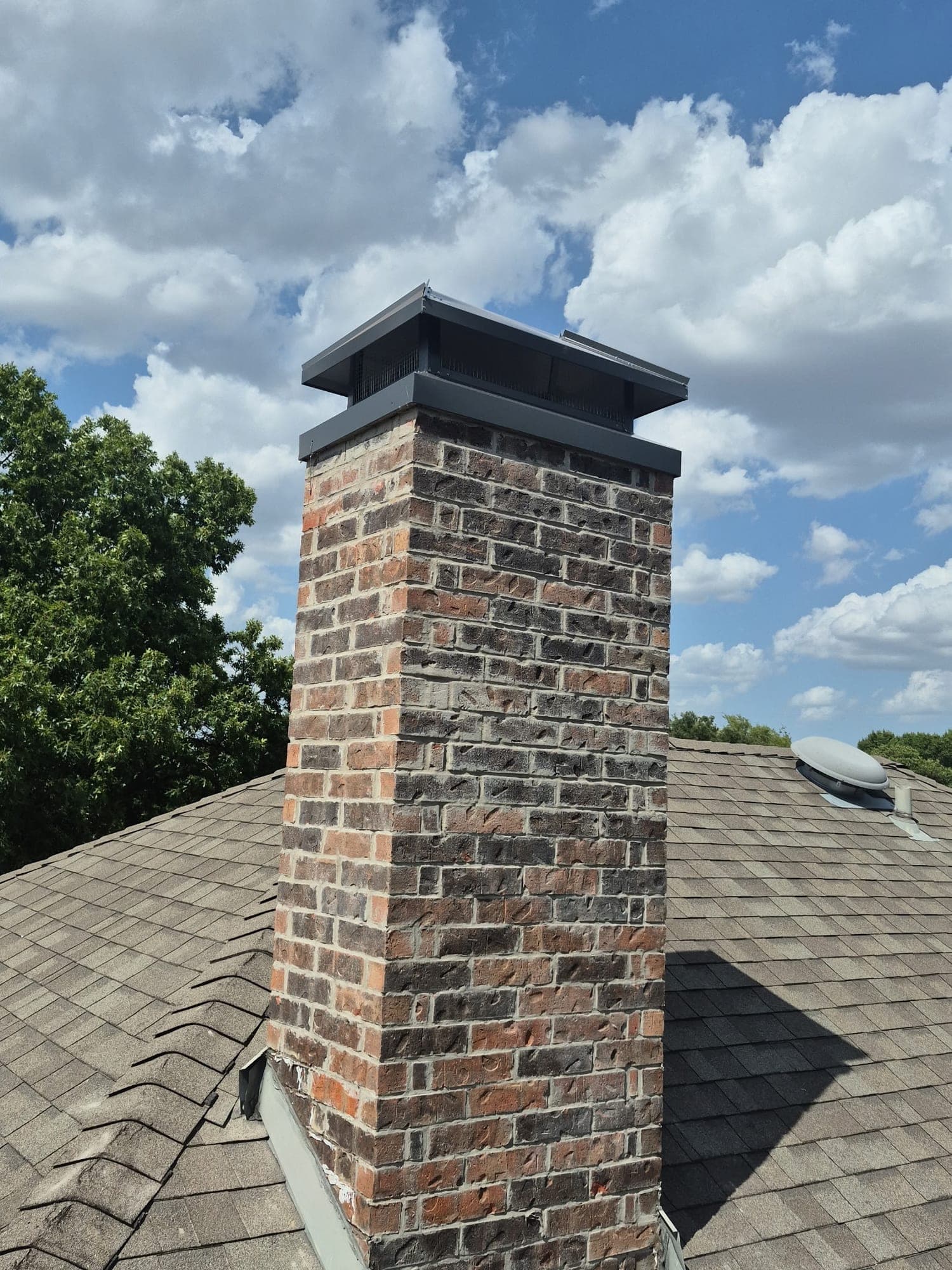
Look at the photo at the top of this post. The chimney itself is in good shape, red and dark brick with the mortar joints intact, a hip style cap up top doing its job against the sky. Down at the roofline you can see the light colored metal tucked along the base, with the shingles stepping up the slope beside it. That metal is the flashing. It is not decoration and it is not caulk. It is a layered waterproof transition between two materials that expand, contract and move at different rates.
Why brick and shingles cannot just touch
Brick is porous and rigid. Asphalt shingles are flexible and they shift with heat. In Dallas we hand both of them a brutal deal: 100 degree roof decks in August, then a norther drops us 40 degrees in a few hours, then horizontal rain blowing off the prairie. Those two materials are never going to form a seal on their own. If a builder simply butted shingles against the brick and ran a bead of sealant, that bead has maybe three or four years in it before it cracks and the water starts walking in.
Proper base flashing is a system, not a single piece. There is step flashing, individual L shaped pieces woven between each course of shingles going up the slope, so water always lands on top of metal and runs down onto a shingle. There is counter flashing, the upper piece that gets cut into a mortar joint in the brick and bent down over the step flashing, so nothing can run behind it. On the uphill side there should be a cricket or saddle on wider chimneys, a small peak that splits the water around the stack instead of letting it pond against the brick.
How the joint fails
Caulk instead of counter flashing
This is what I find most often on older houses around Lakewood and the M Streets, and on plenty of newer builds too. Somebody skipped the saw cut into the mortar and just smeared sealant along the top edge of the metal. It looks fine from the driveway. Up close the sealant has pulled away from the brick in a hairline gap, and that gap is a funnel.
Rust and nail holes
Galvanized flashing has a lifespan. Once it starts to rust through at the lower edge, or once a roofer face nails through the flat of the metal to hold it down, every one of those holes is a leak waiting for the right wind direction.
Flashing left behind after a reroof
When a roof gets replaced after one of our hail events, and we get plenty of those, good crews replace the flashing with the shingles. Some crews shingle right up to the old metal and seal the seam. The roof is new. The weak point is exactly as old as it was before.
Deteriorated mortar at the reglet
Counter flashing lives in a mortar joint, so when that mortar starts crumbling the flashing loses its grip. We wrote about why crumbling mortar and cracked brick get worse every winter, and the base of the chimney is where that decay does the most expensive damage.
What a leak here actually looks like inside
Water coming in at the flashing rarely drips out of the firebox. It runs down the outside of the chimney structure, inside the wall. You see it as a brown ring on the ceiling a foot or two away from the chimney chase, or as soft drywall at the corner where the chase meets the ceiling, or as a musty smell in an upstairs closet that backs onto the chimney. Some people chase that stain around the attic for a year before anybody looks at the roof.
Once it has been going on a while, the damage spreads past drywall. Wet masonry freezes on our handful of hard nights and the face of the brick starts popping off. Framing around the chase stays damp. If you want the full picture of every path water takes, we laid out how water gets into a chimney and how to stop it in an earlier post, and flashing shares that list with the crown and the cap.
What we do about it
The honest answer starts with looking. A proper chimney inspection includes getting up on the roof and checking whether the counter flashing is actually set into the mortar, whether the step flashing is woven or just laid on, and whether the metal has life left in it. From there the fix is usually a chimney repair that cuts a clean reglet into the mortar joints, sets new counter flashing, seals it properly and ties it back into the shingle courses.
Late October is the right time for this. Everybody remembers their fireplace at the same moment around here, and the roof work gets harder once the cold and the rain settle in. If you have seen a stain, or your roof was redone and nobody mentioned the chimney, the smart move is to book a chimney flashing inspection in Dallas before the winter storms line up.
Common questions
Most chimney flashing jobs in the Dallas area fall somewhere between about 500 and 2,000 dollars, depending on the size of the chimney, whether both step and counter flashing need replacing, and whether a cricket has to be built on the uphill side. Larger stacks, steep roofs and masonry that needs tuckpointing before new counter flashing can be set push the number higher. Any real figure comes from someone looking at your roof.
Both trades touch it, and the right answer depends on the failure. If the shingles and step flashing are the problem, a roofer handles it. If the counter flashing has pulled out of the mortar, the brick is spalling, or the chimney crown and cap are also involved, a chimney company is better equipped because the fix includes masonry work. The most common mistake is replacing a roof and leaving the original chimney flashing in place.
Caulk can buy a season, but it is not a repair. Sealant applied over the top edge of flashing cracks within a few years as brick and metal expand and contract at different rates, and the hairline gap that opens up funnels water straight behind the metal. Proper counter flashing is cut into a mortar joint and bent down over the step flashing so gravity, not adhesive, keeps the water out.
Look for a brown ring on the ceiling near the chimney chase rather than directly in the firebox, soft or bubbling drywall where the chase meets the ceiling, peeling paint on an upstairs wall that backs onto the chimney, and a musty smell in a nearby closet. In the attic you may see water staining or darkened framing around the chimney. On the roof, rust, lifted metal edges or visible gaps at the brick are the giveaways.