Crumbling Mortar and Cracked Brick on Your Chimney: Why It Gets Worse Every Winter
 LiorSeptember 28, 20265 mins
On this page
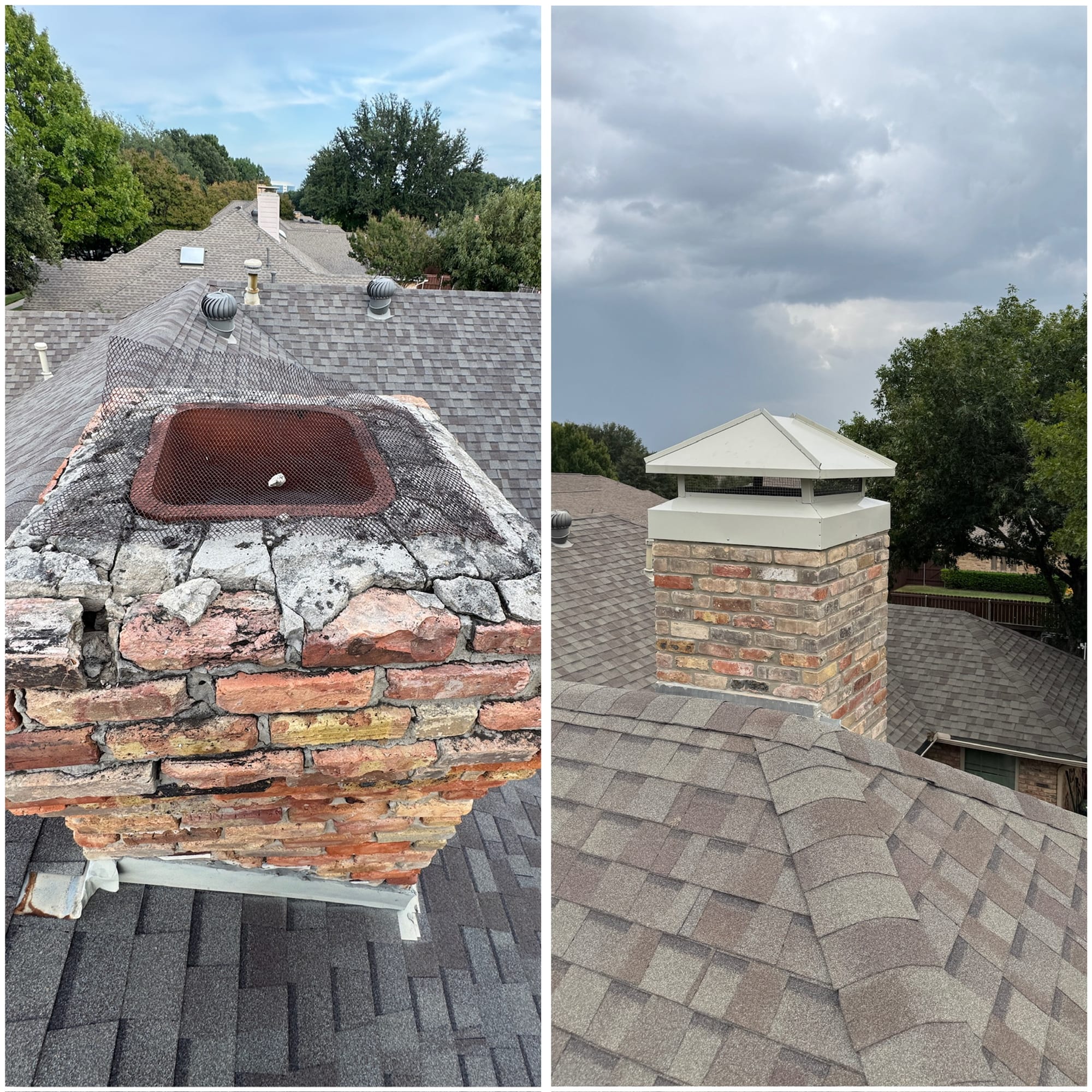
Take a walk out to the curb on a clear morning and look up at your chimney. Not a glance. An actual look. If the mortar joints have gone soft and sandy, if the faces of the brick are flaking off in thin sheets, if the shoulder where the chimney steps down toward the roof looks chewed up, you are seeing a problem that has been building for years and is about to get a shove from the next few months of weather.
I photograph this kind of damage almost every week around Dallas. The close up shots always look worse than what people see from the ground, and that surprises homeowners. From the driveway it reads as an old chimney with character. From the roof, three feet away, you can put a screwdriver into the joint and pull out a fistful of sand.
What crumbling mortar actually means
Mortar is the sacrificial part of a masonry chimney. It is supposed to be a little softer than the brick so that when the structure moves, the joints take the stress instead of the brick face cracking. That works until the mortar loses its binder and turns back into sand and lime dust. Once the joint recedes, water runs straight into the wall instead of shedding off the face.
Brick has a hard fired outer skin and a soft, porous body underneath. When that skin cracks or pops off, a process called spalling, the brick starts drinking water like a sponge. You will see the flaked faces piled in the gutter or scattered on the shingles below. Those pieces are not coming back, and the brick they came off of will not reseal itself.
Why the shoulder goes first
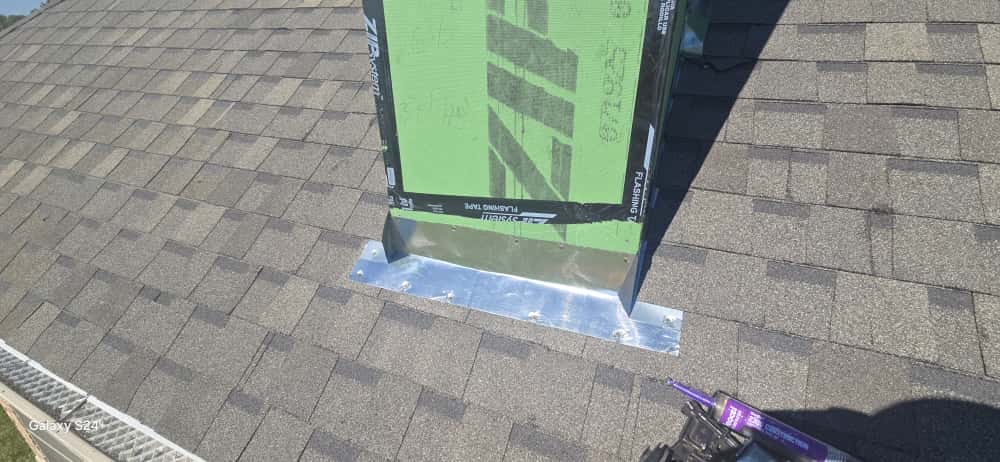
The shoulder, that sloped step where a wide chimney narrows as it passes the roofline, is a shelf. Rain lands on it and sits there. If the mortar wash on top of that shoulder has cracked, or the flashing where the masonry meets the shingles has lifted away from the brick, water is getting in at the exact spot with the least protection. That is why the worst decay almost always shows up right where the chimney meets the roof rather than up at the crown.
Why winter makes it worse, even in Dallas
People assume freeze damage is a Chicago problem. It is not. North Texas is actually harder on masonry than a place that freezes in November and stays frozen until March. We get repeated crossings of 32 degrees. A wet 40 degree afternoon, a 28 degree night, back up to 55 the next day. Each of those swings is a full freeze thaw cycle, and we can rack up dozens in a single Dallas winter.
Here is what that does. Water soaks into the open joints and the porous brick during the day. Overnight it freezes and expands roughly nine percent. That expansion pushes the brick face outward from the inside and widens every crack a fraction of a millimeter. The next morning it thaws, the slightly bigger crack takes on slightly more water, and the whole thing repeats. It is a ratchet. It only goes one direction.
Add in the February hard freezes we have had in recent years, and a chimney that was merely tired in September can be genuinely unstable by March. The older homes in Lakewood and along Swiss Avenue with original 1920s masonry are especially prone to this, because the soft lime mortar those chimneys were built with was never meant to go a hundred years without maintenance.
What it costs you if you wait
Water that gets into masonry does not stop at the masonry. It travels down the chase, rusts the damper and the firebox components, stains the ceiling drywall next to the fireplace, and rots the framing you cannot see. We wrote about how water finds its way into a chimney and what stops it, and nine times out of ten deteriorated joints are part of the answer.
There is a structural side too. A chimney above the roofline is a freestanding column of brick with nothing bracing it. When enough joints turn to sand, that column loses the ability to resist wind load. I have leaned on chimneys in Oak Cliff that moved under hand pressure. That is not a next spring project.
Repointing versus rebuilding
If the deterioration is limited to the joints and the brick is still sound, repointing is the fix. We grind the failed mortar out to a proper depth, match the new mortar to the original in strength and color, and tool the joints so they shed water. Done right, it lasts decades.
Once the brick itself is spalling badly, or the courses have shifted out of plumb, you are looking at a partial rebuild of the section above the roofline. That usually comes with new flashing and a fresh crown, because those were probably the entry points to begin with. Either path starts with an honest assessment of how deep the damage runs, which is what our chimney repair work is built around.
Look now, not in December
A professional chimney inspection in early fall gives you time to schedule masonry work while the weather still cooperates. Mortar needs moderate temperatures to cure properly, so a January repair often has to wait anyway. If you are not sure what to look for from the ground first, the rundown on the warning signs that show up before winter is a good place to start.
If the joints on your chimney look sandy or you are finding brick chips in the gutters, the smart move is to book a chimney masonry inspection in Dallas before the first freeze does another round of damage.
Common questions
Repointing cost depends on how much of the chimney needs work and how tall it is. Spot repointing of a few failed joints on a small chimney often lands in the several hundred dollar range, while fully repointing everything above the roofline more commonly runs from roughly 1,500 to 4,000 dollars. A partial rebuild with new flashing and a crown costs more. Scaffolding needs, roof pitch, and brick matching all move the number.
From the ground with binoculars, look for joints that appear recessed or shadowed compared to the brick face, missing chunks of mortar, and brick faces that look flaky or lighter in color where the outer skin has popped off. Check the gutters and the ground at the base of the chimney for sand, mortar crumbs, or thin brick chips. Water stains on the ceiling or wall beside the fireplace are another strong indicator.
It can be. Deteriorated joints let water into the structure, which corrodes the damper and can damage the flue liner. If the liner is compromised, combustion gases including carbon monoxide can leak into the living space or heat can reach nearby framing. Badly eroded masonry above the roofline also loses structural stability and can lean or shed brick. Have it inspected before burning rather than assuming exterior damage stays outside.
Spring and fall are ideal. Mortar cures best between about 40 and 90 degrees, so both hard freezes and extreme summer heat cause problems. Cold slows curing and can freeze the water in fresh mortar, while triple digit heat dries it too fast and weakens the bond. Early fall is especially practical because the work finishes before winter freeze thaw cycles begin and before heating season booking gets tight.