Gas Fireplace Sat Unused All Summer? Check This First
 EmilySeptember 14, 20265 mins
On this page
Your gas fireplace has probably been sitting quiet since February. Six or seven months of Dallas heat, humidity, dust from the ceiling fans, and maybe a spider or two setting up shop in the burner tray. Right now the weather is still warm enough that nobody is thinking about it. That is exactly why now is the smart time to look.
I have spent enough Octobers driving between Lakewood and Lake Highlands answering "it worked fine last year" calls to know how this goes. The first real cold front rolls through, everybody reaches for the switch on the same evening, and the ones who checked in September are warm while everybody else waits. Here is what I would want you to look at before that happens.
Start with your nose, not the switch
Before you touch anything, stand near the firebox and smell. A faint dusty smell is normal. Rotten eggs or sulfur is not. That odorant is added to natural gas specifically so you notice it, and if you smell it with the fireplace off, do not light anything, do not flip a light switch, open a window, get everyone out, and call the gas utility from outside.
A musty or sour smell is a different problem and usually means moisture. Summer humidity in Dallas gets into a cold flue and settles, especially in homes near White Rock Lake where the air never really dries out. We wrote about why fireplaces smell bad in summer and what actually fixes it, and the answer is rarely an air freshener.
Look inside the firebox
Open the glass or the screen and get a flashlight in there. You are looking for three things.
Debris and nests
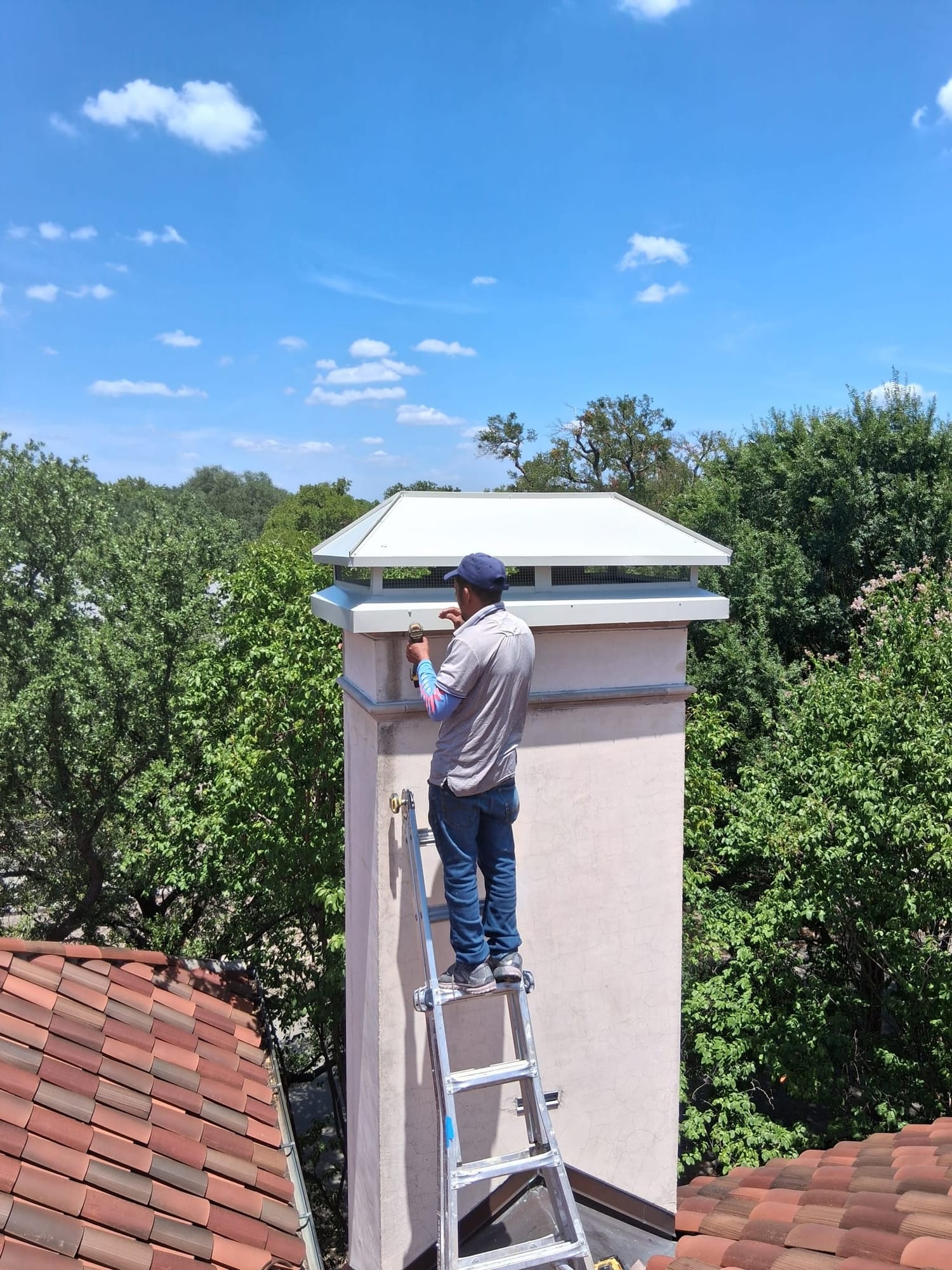
Dust, pet hair, dead insects and leaf litter collect on the burner and in the pilot area. Spider webbing in a pilot orifice is one of the most common reasons a gas fireplace will not light after a long off season. It takes almost nothing to block that tiny opening. If you find twigs or a pile of leaves up in the flue area, something got in from the top, which usually points to a damaged or missing cap. Birds and squirrels treat an open flue as prime real estate all spring and summer long.
The logs and the embers
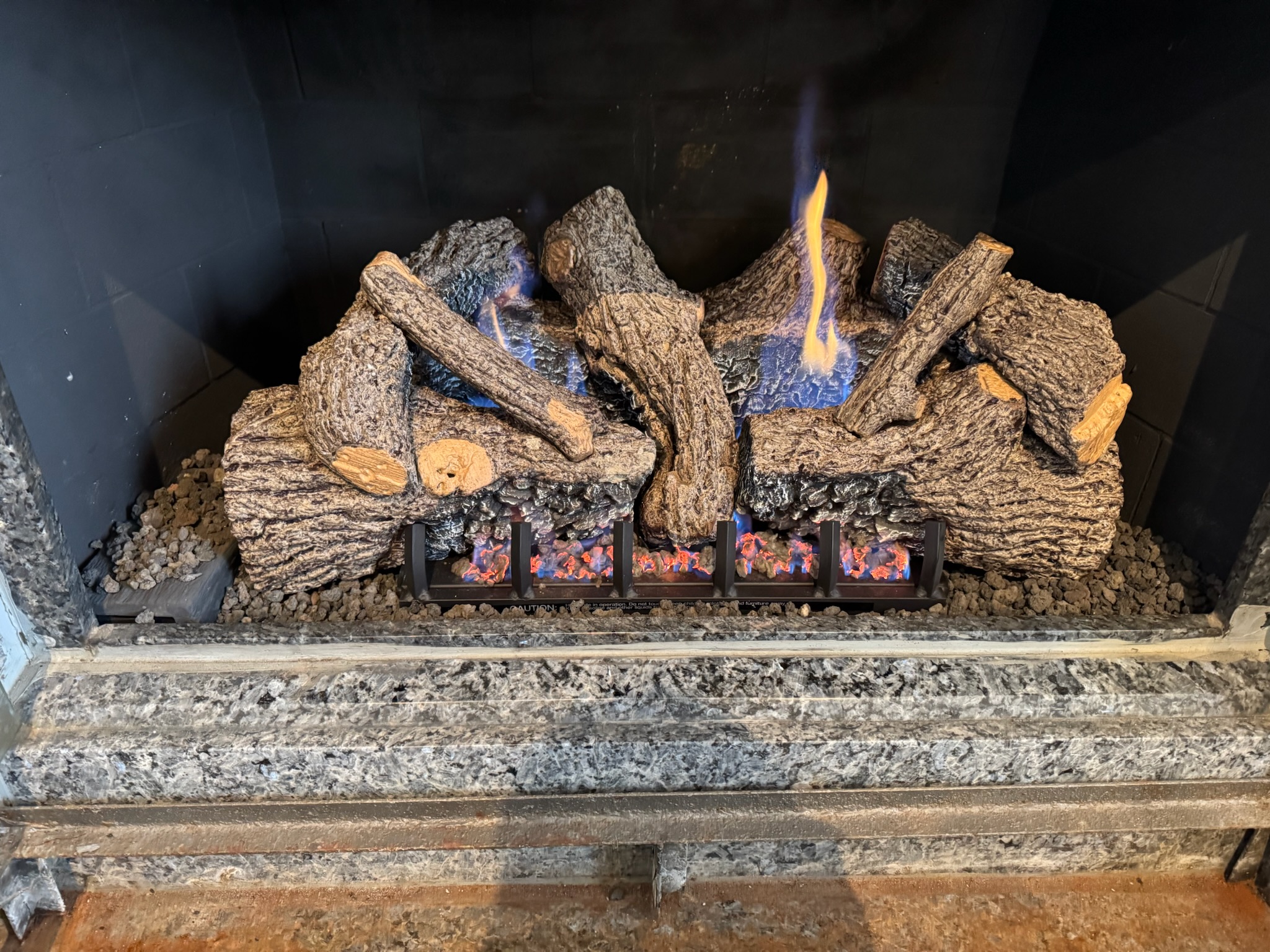
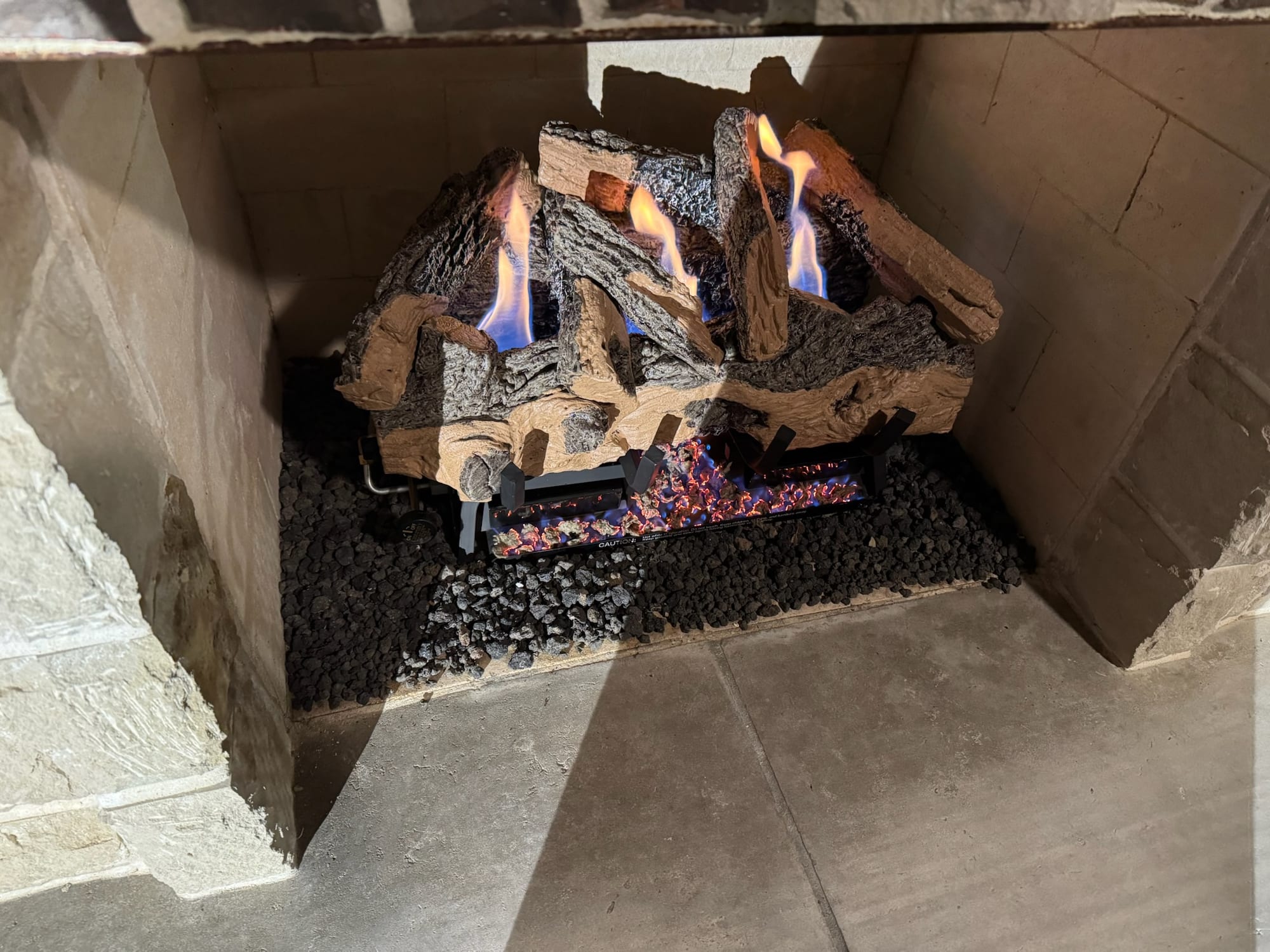
Ceramic logs sit in a specific arrangement for a reason. If a log has shifted, or somebody bumped it while cleaning, flames can hit it wrong and produce soot and carbon monoxide instead of clean heat. Snap a photo now while you remember, and if the logs look moved from last season, leave them and have a tech set them properly. The glowing ember material should be loose and thin, not packed into the burner ports.
Rust and soot
Black soot streaking on the glass or up the back wall means the burn was not clean last winter. Rust on the burner tube or the firebox floor tells me moisture has been sitting in there. Neither is something to shrug off.
Check the glass and the gasket
Direct vent units have sealed glass fronts. That gasket around the edge is doing real work, keeping combustion byproducts inside the sealed chamber. If it is brittle, cracked or crumbling, the seal is gone. Never operate a direct vent fireplace with the glass removed or the gasket failed. Also check the glass itself for chips or a hairline crack. Dallas houses shift, and so do fireplace fronts.
Test the pilot and the controls
If you have a standing pilot, follow the lighting instructions on the plate inside the lower access panel. It may take a few tries to purge air out of the line after months of sitting. If it lights and then dies, or will not catch at all, the thermocouple or thermopile is often tired. Millivolt systems weaken with age and a weak thermopile is a classic September call.
Electronic ignition units have batteries in the receiver box, and those batteries have been sitting in a hot Dallas wall cavity all summer. Replace them before you troubleshoot anything else. Remotes and wall thermostats have their own batteries too. I have driven out for a dead fireplace and fixed it with two AAs more than once.
If it still will not fire, work through our gas fireplace troubleshooting guide before assuming the worst. Plenty of no start calls come down to a gas valve nobody turned back on.
Do not skip the vent
The part you cannot see matters most. Vent pipe joints separate, termination caps get crushed by hail, and in older Preston Hollow and Kessler Park homes a gas insert is often vented through original masonry that was never lined for it. A blocked or leaking vent puts carbon monoxide in the room, and gas appliances do not give you the visual warning a wood fire does.
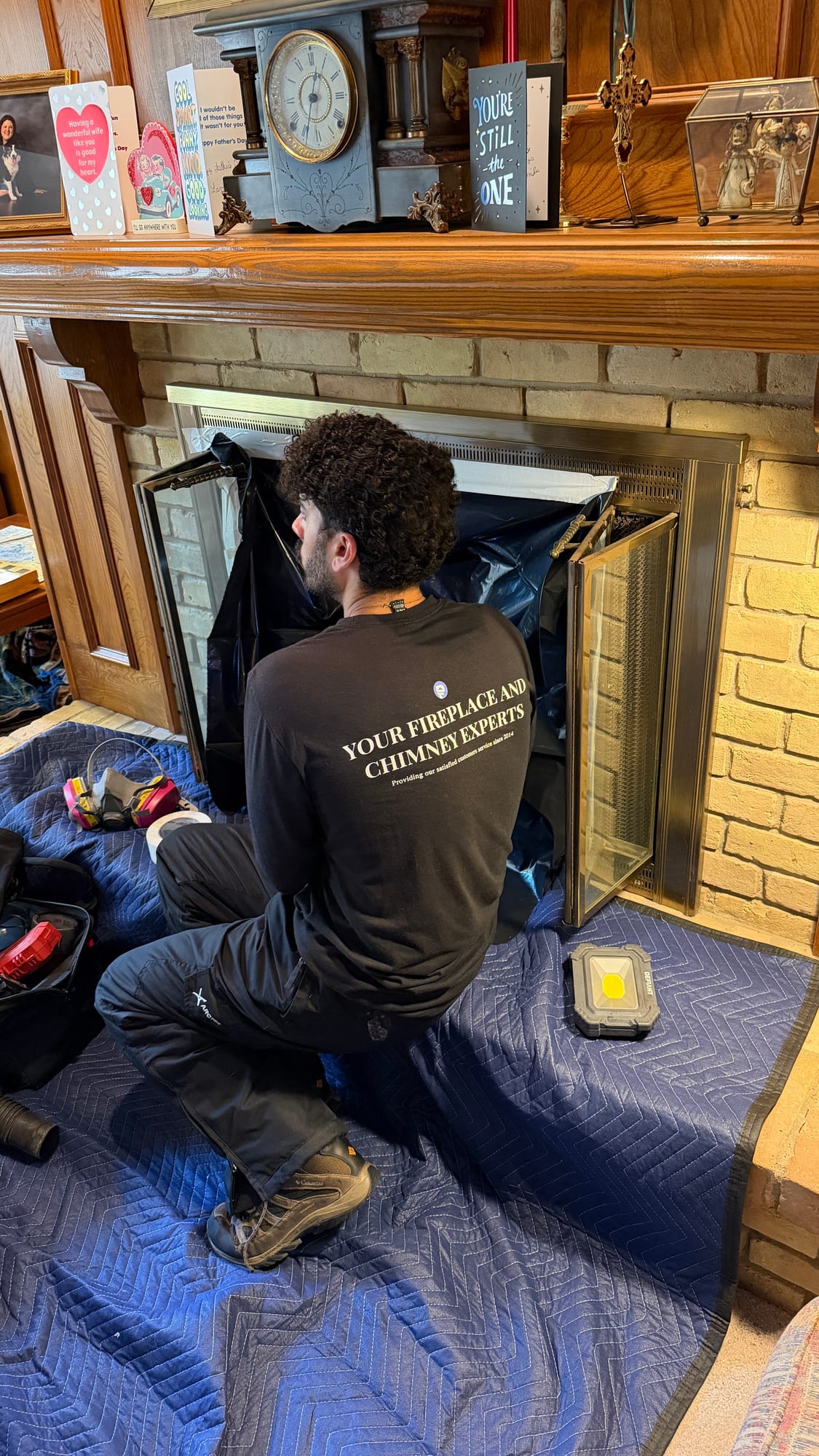
This is where a homeowner check stops and professional fireplace maintenance begins. A proper annual service includes cleaning the burner and pilot assembly, testing gas pressure, checking the vent from the appliance to the termination, and verifying the safety shutoffs actually shut off. When a component has failed, gas fireplace repair handles valves, thermopiles, igniters and glass gaskets.
The timing is the whole point
Mid September is the quiet window. By the third week of October our schedule is stacked and the parts houses run thin on common valves. If you want your fireplace checked before the first front rather than after it, now is when to book a gas fireplace inspection in Dallas and be done thinking about it.
Test your carbon monoxide alarms while you are at it. New batteries, and replace any unit older than seven years. It is five minutes and it covers you for everything you could not see with a flashlight.
Common questions
The most common cause is a spider web or dust blocking the tiny pilot orifice, which happens often after months of no use. Other frequent culprits are dead batteries in an electronic ignition receiver, a gas shutoff valve someone closed and forgot, air trapped in the gas line that needs a few purge attempts, or a weak thermopile that can no longer hold the valve open once the pilot lights.
An annual gas fireplace service and safety check in the Dallas area generally runs somewhere in the low to mid hundreds of dollars, depending on the unit type and whether vent access is difficult. Repairs are separate. Replacing a thermopile, thermocouple or set of batteries sits at the low end, while a new gas valve or a glass and gasket assembly costs considerably more because of the part itself.
Yes. Manufacturers and national safety standards call for annual service on gas hearth appliances. Even without wood smoke or creosote, the pilot assembly collects dust and webbing, burner ports clog, gaskets dry out, vent joints loosen, and safety controls drift out of spec. Gas appliances also fail quietly, so an annual check is the only reliable way to confirm the venting and shutoffs are still doing their job.
A dusty or slightly burnt smell during the first fifteen to thirty minutes is normal as accumulated dust burns off the logs and burner. Run the fireplace with a window cracked and the room ventilated. What is not normal is a rotten egg or sulfur smell, which indicates a gas leak, or a persistent exhaust and headache inducing odor, which suggests a venting problem and should stop use immediately.