Your Gas Logs Are Covered in Black Soot: What That Means and Why Gas Fireplaces Still Need Cleaning
 AnastasiaOctober 5, 20265 mins
On this page
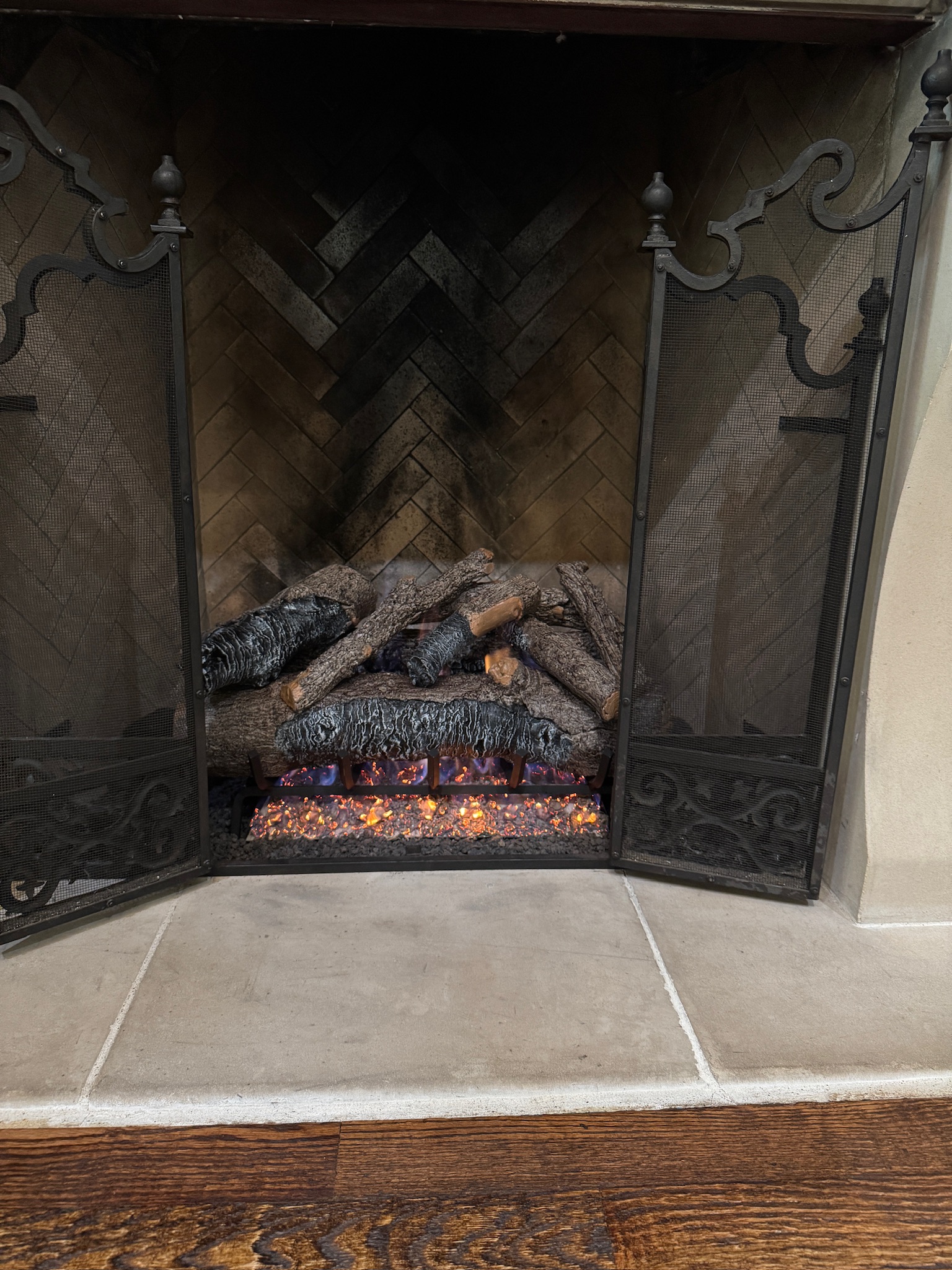
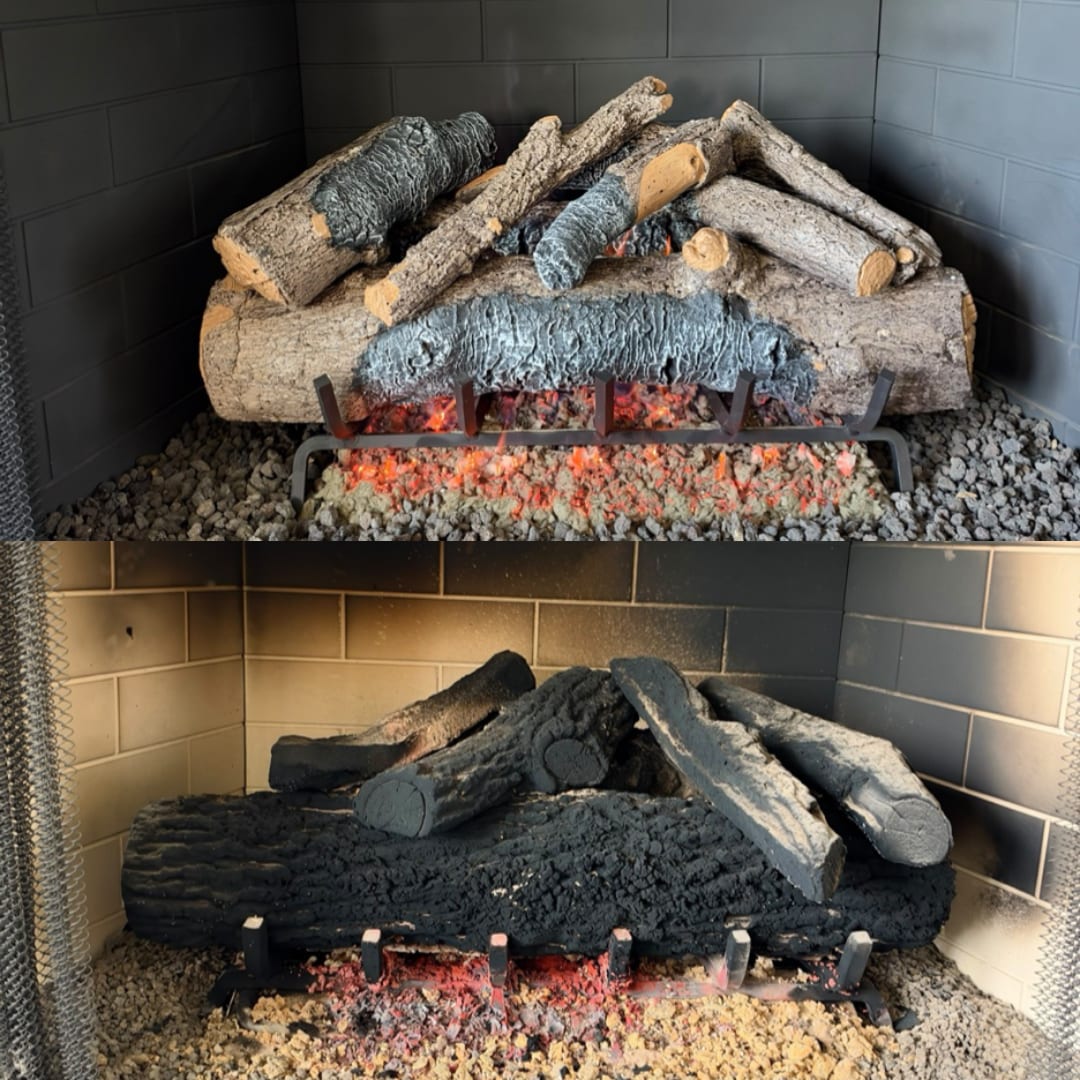
Open the doors on a gas fireplace in early October and you often see the same thing I see: a log set that started life tan and gray, now wearing a thick coat of black. The embers glow red underneath, the burner still lights, and the homeowner figures it just looks like a real fire is supposed to look. Sometimes that is true. Often it is not.
Soot on gas logs is a message. It tells you something about how that appliance is burning, and it is worth reading before you run the fireplace hard for the next four months.
A little black is normal. A lot is not.
Gas log sets are designed to produce a yellow, lazy flame. That is the whole point. A clean blue flame looks like a gas range and nobody wants a gas range in their living room, so manufacturers build these burners to make the flame dance and produce a bit of carbon on purpose. A faint darkening on the top edges of the logs after a season or two is expected.
What is not expected is heavy, velvety black covering the whole set, soot drifting out onto the hearth, gray film on the glass, or dark streaking climbing the firebox tile above the opening. That is incomplete combustion, and it means the burner is making more carbon than the appliance can carry away.
What causes the heavy sooting
Nine times out of ten it comes down to one of a handful of things. The logs have been moved. Gas log sets are positioned to exact specifications, and if a flame tip is licking directly against a log instead of passing around it, that contact point quenches the flame and dumps carbon. It happens all the time after someone pulls the logs out to vacuum, or after a housekeeper rearranges them to look prettier.
The air shutter at the burner inlet can drift out of adjustment or clog with lint and dust. Less primary air means a richer, dirtier flame. Burner ports plug with rust flakes, spider webbing (gas attracts a particular little spider that loves pilot assemblies), and the fine Blackland Prairie dust that gets into everything in this city. Lava rock or ember material piled too thick over the burner smothers it. And on a vented set, a damper that is only partly open or a flue that is not drafting right will push combustion products back into the room instead of up and out.
Then there is the one nobody thinks about: the wrong fuel. A natural gas log set running on propane, or a propane set converted badly, soots immediately and badly.
Why this matters beyond the mess
Soot is unburned carbon. Where there is unburned carbon, there is almost always carbon monoxide along with it. On a vent free set that is a real concern, because everything the burner produces stays in the room. On a vented set it should go up the flue, but only if the flue is clear and the damper is open. We have written about the signs that a fireplace is putting carbon monoxide into the house, and a heavily sooted log set belongs on that list.
Soot also insulates. A log coated in carbon does not radiate heat the way a clean ceramic log does, so you burn more gas for less warmth. It accelerates rust on the burner and the grate. And in older homes around Lakewood and Swiss Avenue, where a gas set often sits inside a masonry firebox that was built for wood, that soot settles into the flue along with whatever creosote the previous owners left behind.
What cleaning a gas fireplace actually involves
People assume gas means maintenance free. It means low maintenance, which is a different thing. A proper gas fireplace and firebox cleaning means pulling the log set out, photographing or noting the exact factory placement, and cleaning each log with a soft brush rather than anything wet or abrasive. The ceramic fiber is fragile and it absorbs liquid, which then steams and cracks the log on the next burn.
The burner comes out and gets its ports cleared. The pilot assembly, thermocouple and thermopile get brushed, because a dirty thermocouple is the single most common reason a gas fireplace quits lighting in December. Lava rock and embers get replaced or redistributed at the correct depth. Glass gets cleaned with the right product. Then the logs go back exactly where the manufacturer put them, and we watch the flame for several minutes to confirm it is burning the way it should.
If the sooting traces back to a mechanical fault (a failing valve, a cracked log that is deflecting flame, a blocked vent on a direct vent unit), that moves into gas fireplace repair territory. Many of these are small fixes caught early and expensive ones caught late.
Timing, and why October is busy
The first real cold front usually comes through Dallas in the back half of October, and the phones light up the same week. If your log set looked black when you peeked at it last spring, now is the window. A gas set that sat idle through a humid summer near White Rock Lake can also pick up rust, spider webbing and odor, and we walked through what to check on a gas fireplace after a summer of sitting if you want to look it over yourself first.
If the black is spreading and you would rather have it sorted before the cold arrives, you can book a gas fireplace cleaning in Dallas and get on the schedule while there is still room on it.
Common questions
A light darkening on the upper surfaces of gas logs is normal, because these burners are built to make a yellow flame that produces a little carbon on purpose. Heavy black coating across the whole set, soot falling onto the hearth, or dark streaks climbing the wall above the opening is not normal. That indicates incomplete combustion, which usually means carbon monoxide is being produced alongside the soot and the appliance needs to be checked.
You can brush loose soot off gently with a soft paintbrush or a vacuum brush attachment, but avoid water, soap and any abrasive cleaner. Ceramic fiber logs absorb liquid and can crack or explode when heated. The bigger risk is placement. Gas logs must sit in an exact factory position, and moving them so a flame touches a log directly is one of the most common causes of heavy sooting.
Once a year, before the heating season, is the standard recommendation for any gas burning appliance including log sets, inserts and direct vent units. Annual service covers the burner ports, pilot assembly, thermocouple, venting and log placement. Gas fireplaces burn cleaner than wood, but the pilot assembly collects dust and spider webbing, the vent can block, and components wear. Skipping years is how a small adjustment turns into a part replacement.
A standard gas fireplace cleaning and service visit in the Dallas area generally falls somewhere in the range of about 150 to 350 dollars, depending on whether it is a vented log set, a vent free set or a sealed direct vent insert, and whether a full chimney inspection is included. Repairs such as a new thermocouple, valve work or replacement logs are priced separately after the technician sees what is actually failing.
Sudden sooting usually has a specific cause. Someone moved the logs so a flame now hits one directly. The air shutter has clogged with dust or drifted closed. Burner ports are blocked by rust flakes or spider webbing. Ember material or lava rock is piled too thick over the burner. On a vented set, a partly closed damper or an obstructed flue will also push dirty combustion back into the firebox.