
Cracks across a refractory panel
Worth assessing rather than assuming. Width, depth and position all matter more than the fact of a crack.
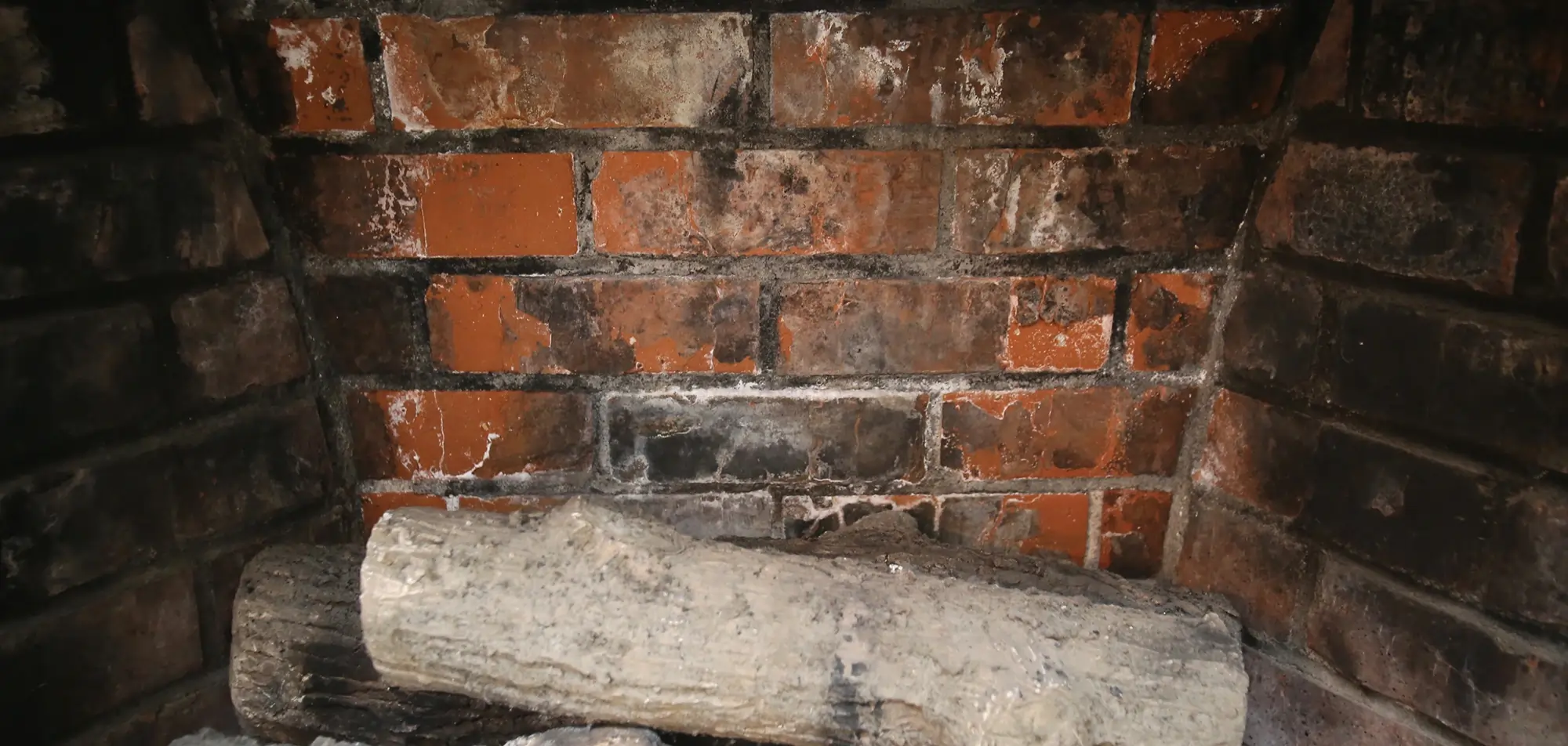
Fireplace repair in Flower Mound almost always means a factory-built unit rather than a site-built masonry firebox. Those units were engineered with a service life, and after twenty-five seasons of thermal cycling the refractory panels lining them have usually developed hairline cracking at minimum.
Cracked refractory is not cosmetic. Those panels stand between the fire and the metal shell of the unit. They are replaceable and most models are still supported, but the part has to match the unit, which is why we identify the model before quoting rather than after.
A factory-built fireplace is an assembly of specified parts rather than a structure. Refractory panels, the grate, the damper, the gasket, the glass and the venting are all components with part numbers, and each is meant to be replaced rather than patched.
That is why identifying the unit comes before anything else. What can be fitted is determined by the manufacturer and model, and a panel that nearly fits is not a repair.
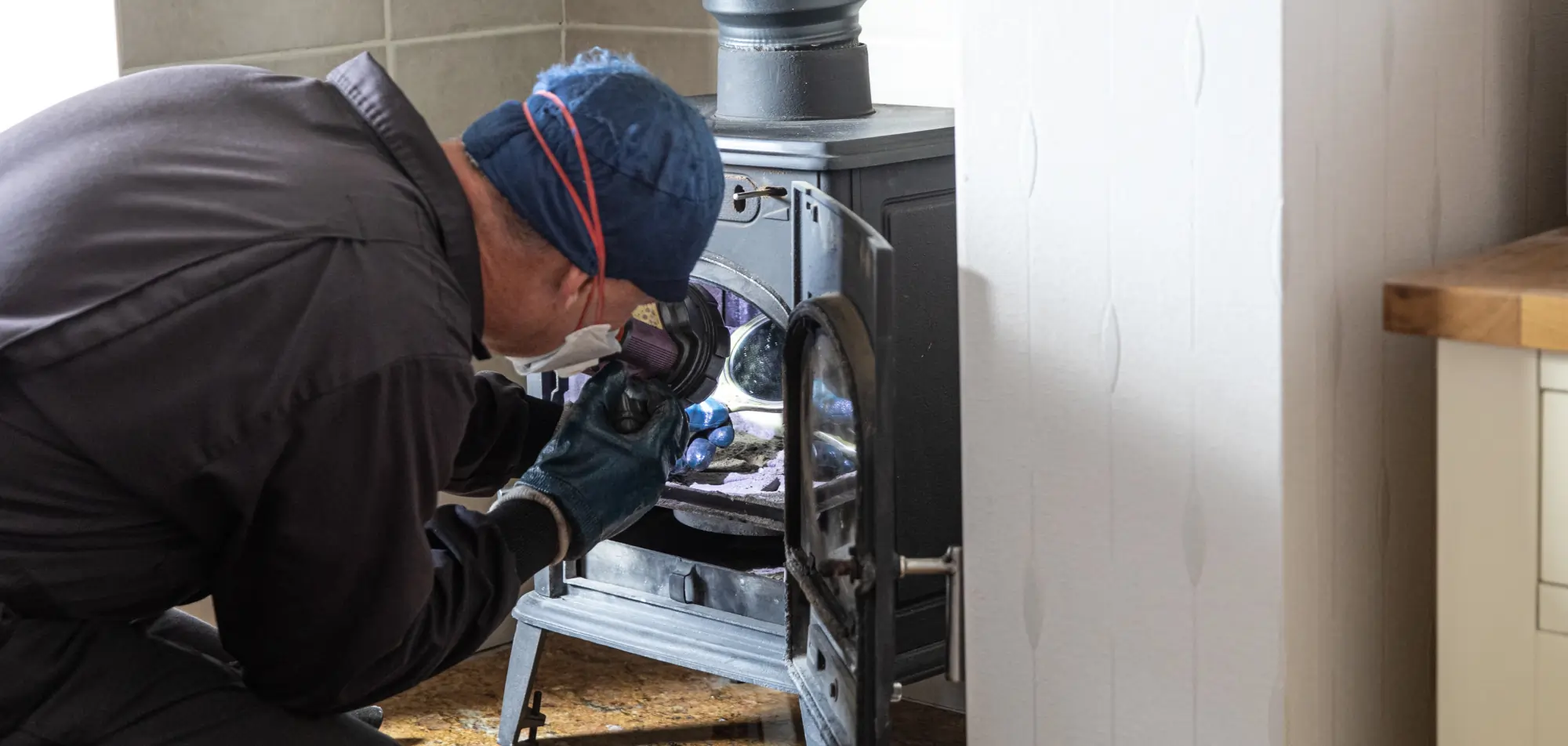
The panels lining the firebox are not decorative. They stand between the fire and the metal shell of the unit, and they are rated to do that at temperatures the shell is not.
Cracking is therefore a condition question rather than a cosmetic one. A fine crack may be acceptable and a wide or through-crack is not, and the difference is a judgement that should be made in front of the unit rather than from a photograph.
Worth assessing rather than assuming. Width, depth and position all matter more than the fact of a crack.
Movement over many heat cycles. It exposes what the panels are there to protect.
On a sealed unit the gasket is what makes it sealed. Hardened cord no longer compresses and no longer seals.
Both directions are a problem: one wastes heat, the other traps exhaust.
Usually water arriving from above, which means the repair starts at the top of the chimney rather than in the room.
Panels matched to your unit model. Where a model has been discontinued we tell you that before you spend money looking.
Seized, warped and disconnected dampers repaired so the flue closes properly between fires.
Cracked mortar joints, failed seams and damaged floor panels addressed before they reach the shell.
Parging and repair above the damper, where draft problems often start.
Failed blowers and thermal switches diagnosed and replaced on units built to carry them.
Manufacturer, model and the data plate if it survives. Everything after this depends on it.
Panels, joints, grate, damper, gasket, glass and venting, judged against what the manufacturer specifies rather than by eye.
Many nineties units are still supported. Some are not, and if yours has been discontinued you get told that plainly rather than sold a workaround.
Replacements matched to the unit, so the appliance still performs the way it was certified to.
The unit is run and checked, not simply reassembled.
The first visit identifies the unit and the fault. Common parts are often carried; panels and model-specific components are ordered against the model number.
Where a unit is genuinely beyond parts support we say so and set out the options, including replacement, rather than fitting something that nearly works.
Keep water out of it. Most firebox corrosion we see in Flower Mound arrived through a failed chase cover rather than from anything that happened in the room.
Do not over-fire it. A manufactured firebox is rated for a fuel load, and repeatedly exceeding it is the fastest way to crack refractory.
Have the panels looked at annually. Caught early they are a replaceable part; left long enough the damage moves to the shell behind them.
Straight answers from the work we do here, not general advice copied from a manual.
Usually. Most units from the nineties are still supported. The panel has to match the unit, so we identify the model first and tell you plainly if it has been discontinued.
It is worth looking at. Those panels are what stand between the fire and the metal shell, so cracking is a condition issue rather than a cosmetic one.
By its model number. Many nineties units still have parts available. If yours has been discontinued we will say so directly rather than fitting something that nearly matches.
Not necessarily, and that is the honest answer. Width, depth and position all matter. It is a judgement made in front of the unit rather than from a description.
Often just the damaged one, provided the rest are sound and the part is still available for your model. Where panels have worn unevenly, replacing the set gives a better result, and we will explain which situation you are in.
Common items are frequently on the van. Model-specific parts such as refractory panels are ordered against the data plate, and lead time depends on the manufacturer rather than on us. We will give you the timeframe once the unit is identified.
It depends on what has failed and whether parts are still supported. A single cracked panel on a supported unit is straightforward. A discontinued unit with several failures is a conversation about replacement, and we would rather have that conversation than sell you a repair that will not last.
Full flue, smoke chamber and firebox swept with HEPA containment throughout.
Read moreChase covers, crowns, flashing and masonry, fabricated to fit your chimney.
Read moreA written condition report on the firebox, venting and clearances.
Read moreFirebox, grate, damper and glass brought back and checked.
Read moreThe annual visit that keeps repairs small and the season trouble-free.
Read morePilot, valve, burner, glass seal and exterior termination serviced.
Read moreOur contact information, hours, and location.
Our dispatch team will reach out shortly.
Fill out our quick form to schedule a service call with our team today!
Whether it’s time for a chimney cleaning or there’s something you’d like us to take a look at, we’re here to help.
Serving homeowners across Dallas–Fort Worth.