
Rust streaks down the chase siding
Runoff from a corroding cover. The staining is the symptom; the cover above it is the fault.
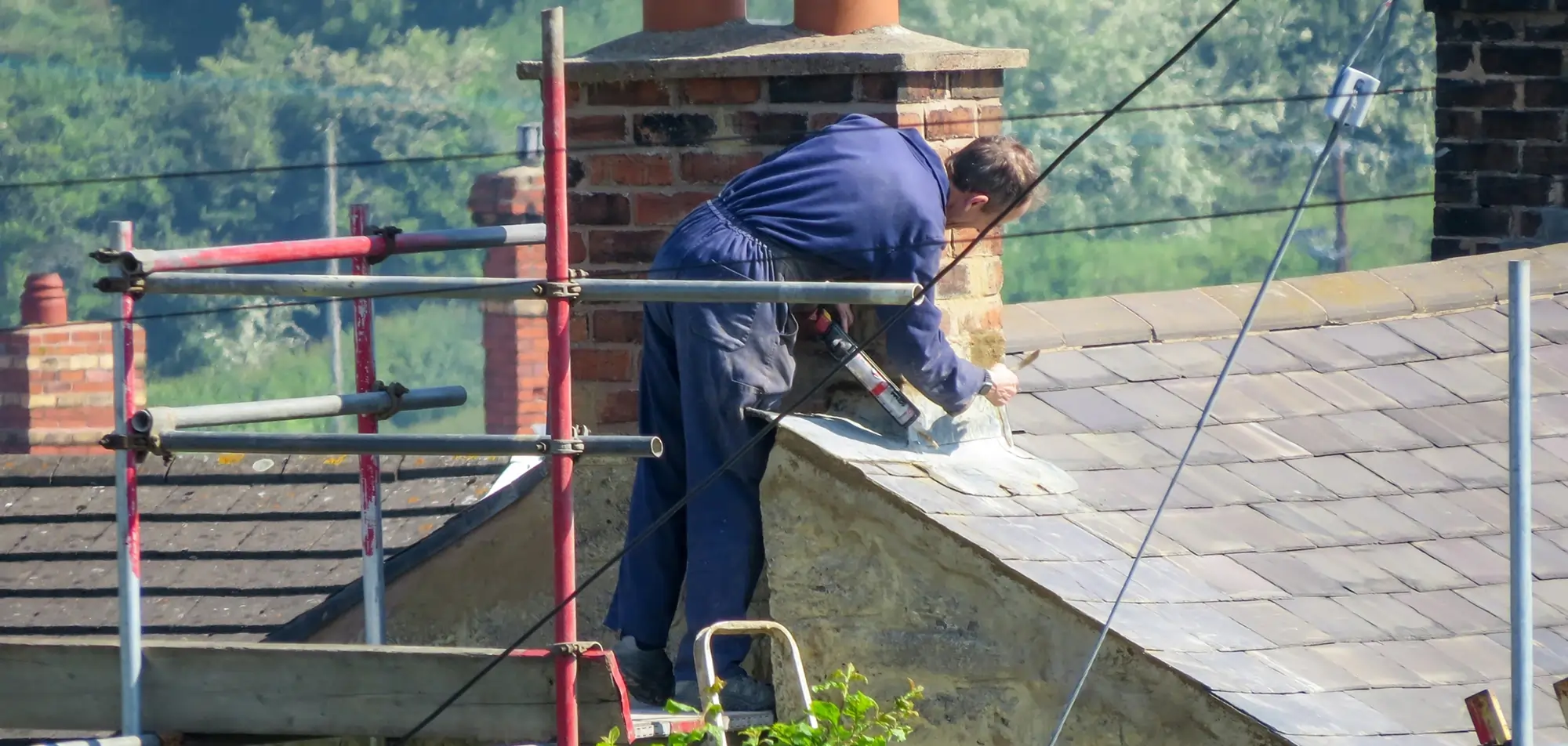
Most chimney repair in Flower Mound is not brickwork. The typical home here was built around 1997, which means the chimney is a framed chase with metal components inside it rather than a masonry stack, and the repairs it needs are fabrication and sheet metal work rather than repointing.
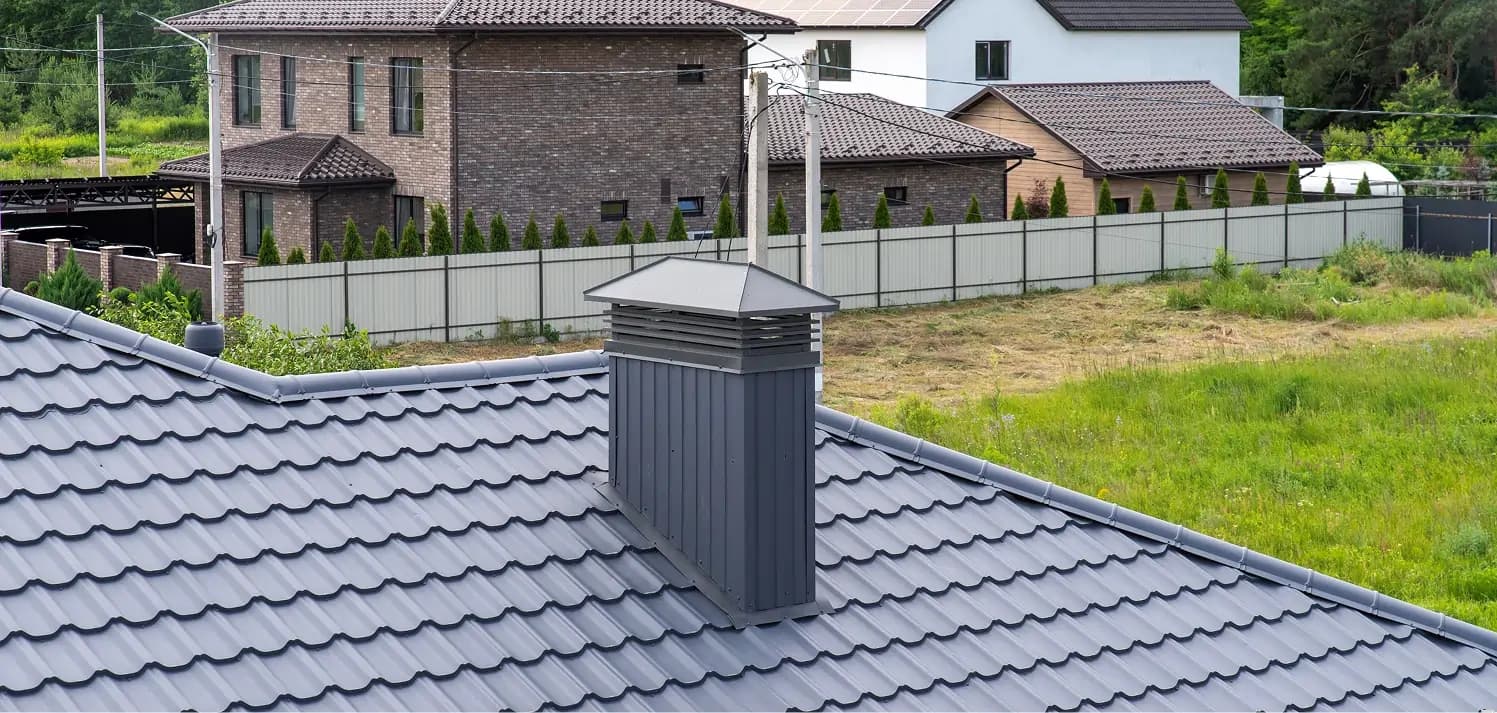
The single most common repair we carry out in this town is chase cover replacement. Builder-grade galvanized covers corrode through in roughly twenty-five to thirty years, which puts most of the housing stock in range right now, and a failed cover lets water into the framing and firebox from behind where nobody sees it.
A masonry chimney is brick or stone around a tiled flue, and it fails at the crown, at the mortar joints and where the flashing meets the roof. A framed chase is a timber box, usually sided to match the house, with a metal chimney inside it and a sheet-metal cover on top.
Flower Mound has a great deal of the second kind. The repair work there is fabrication and sheet metal rather than bricklaying, and the parts that fail are the cover, the storm collar, the flashing and occasionally the chase framing itself.
Nearly every chimney repair is a water repair. A corroded cover, an open crown joint or lifted flashing lets water into a cavity nobody looks inside, and it runs down through the structure instead of showing on a ceiling.
By the time a stain appears indoors the water has usually been getting in for seasons. At that point the repair takes in the framing and the firebox, not only the part that let it through.
Runoff from a corroding cover. The staining is the symptom; the cover above it is the fault.
Efflorescence. Salts carried out of the masonry by water moving through it, so it marks a moisture path rather than a surface problem.
Flashing that has moved. One of the most common sources of a leak blamed on the roof.
The concrete cap on a masonry chimney. Once it is open, water gets between the flue and the brick.
Water inside the chase or the masonry, usually well before anything is visible.
Fabricated to your chase dimensions in stainless or painted steel, with a cross-break so water sheds instead of pooling.
On the masonry chimneys that do exist here, cracked and spalling crowns rebuilt and sealed against further water entry.
Failed or lifted flashing reset and sealed, which is the second most common water entry point on Flower Mound rooflines.
Cracked refractory replaced with panels matched to your unit model, or the firebox rebuilt where panels are discontinued.
Damaged or disconnected liners repaired or replaced to restore safe venting.
Not where it shows. That means looking at the cover, the crown, the collar, the flashing and the mortar as one system.
Some of what looks alarming is cosmetic, and some of what looks minor is not. You get told which is which before anything is quoted.
Chase covers and caps are made to the measurements of your chimney rather than fitted from a stock size that nearly works.
Sealing a leak without addressing what the water already reached only delays the same call.
Photographs before and after, because most of this work is somewhere you will never stand.
A repair starts with an inspection, because a quote given without seeing the cause is a guess. That first visit establishes what has failed and what the water has reached.
Small work is often done the same day. Fabricated parts such as a chase cover are measured on the first visit and fitted on a second.
Look at the top of the chimney once a year, or have somebody do it. Almost everything expensive starts up there and is cheap while it is still small.
Replace a failing cover before it perforates rather than after. A stainless cover fitted to the chase outlasts the galvanised one it replaces by a wide margin.
After a significant hail or wind event, add the chimney to whatever else gets checked. It takes the same weather as the roof and is inspected far less often.
Straight answers from the work we do here, not general advice copied from a manual.
It is the metal lid on top of the framed box your fireplace sits in. Builder-grade galvanized covers corrode through in twenty-five to thirty years, which puts most Flower Mound homes in range now. Once one fails, water runs down inside the chase and damages the firebox and framing from behind, out of sight.
Yes, and that is most of what we repair here. A framed chase with a metal chimney inside it is the standard build in Flower Mound. The work is fabrication and sheet metal rather than masonry.
Because the flashing where the chimney meets the roof belongs to both, and it is one of the most common places water gets in. It is worth having the chimney side looked at before the roof is reworked.
It is the difference between replacing it once and replacing it again. Builder-grade galvanised covers are what corroded through to create the problem in the first place.
Look at the outside. Brick or stone all the way up is masonry. A box clad in the same siding as the house, usually with a metal lid on top, is a framed chase with a metal chimney inside it. Most Flower Mound homes are the second.
That is the intention, and it is something to discuss before work starts rather than after. Chase covers and caps are fabricated to your measurements, and we will tell you honestly where an exact match to weathered material is not achievable.
That depends on the cause and on your policy, which is between you and them. What we can do is document what we find with photographs and a written description, which is what an insurer will ask for either way.
Full flue, smoke chamber and firebox swept with HEPA containment throughout.
Read moreA written condition report on the firebox, venting and clearances.
Read moreRefractory panels, gaskets and firebox components replaced to spec.
Read moreFirebox, grate, damper and glass brought back and checked.
Read moreThe annual visit that keeps repairs small and the season trouble-free.
Read morePilot, valve, burner, glass seal and exterior termination serviced.
Read moreOur contact information, hours, and location.
Our dispatch team will reach out shortly.
Fill out our quick form to schedule a service call with our team today!
Whether it’s time for a chimney cleaning or there’s something you’d like us to take a look at, we’re here to help.
Serving homeowners across Dallas–Fort Worth.