Signs Your Chimney Needs Repair Before Winter

 IdanJuly 20, 20265 mins
On this page
Every fall I get calls from folks all over Dallas who fire up the fireplace for the first cool evening of the year and notice something feels off. Maybe there is a strange smell, or smoke drifts back into the living room instead of going up the flue. The truth is, most chimney problems do not show up overnight. They build slowly through the hot Texas summer, and by the time you want a warm fire in November, the damage is already done. That is why I always tell my neighbors to check for the warning signs before the first real cold snap rolls in.
Let me walk you through what I look for, and what you can spot yourself without climbing on a roof.
Look at the Masonry First
Your brick and mortar take a beating here. We get blazing summer heat, then sudden storms, and that constant swing between wet and dry works on the masonry all year long. A lot of the older homes I service in Lakewood and Preston Hollow have original chimneys, and while that old brick has character, it also has decades of wear.
Cracked or Missing Mortar Joints
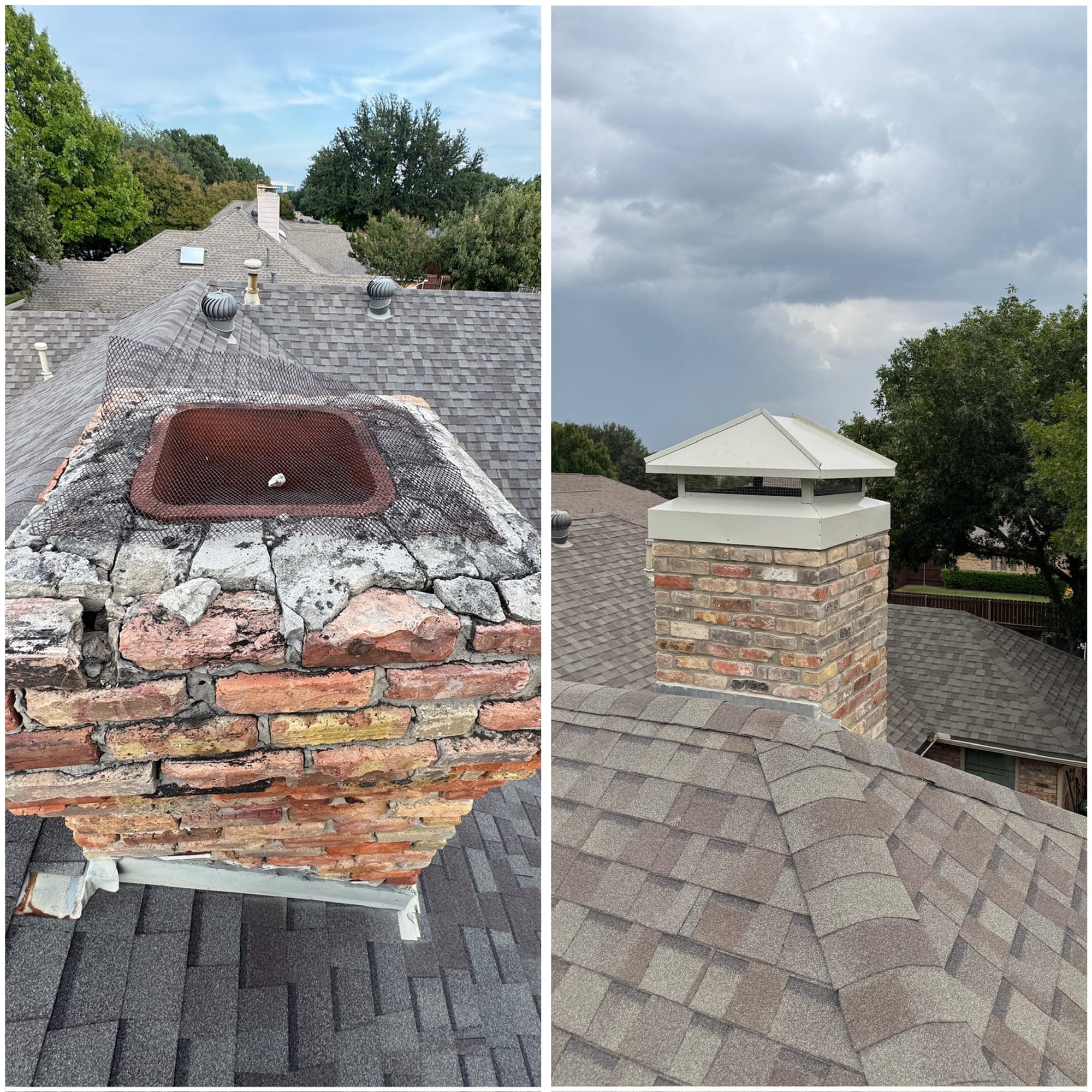
Walk out to your chimney and look at the mortar between the bricks. If you see gaps, crumbling, or spots where the mortar has fallen out completely, water is getting in. Once moisture sits inside those joints and freezes on one of our rare cold nights, it expands and pushes the brick apart. Small cracks turn into loose bricks faster than you would think, and that is the kind of thing you want caught early with proper chimney repair before it spreads.
White Staining on the Brick
If you notice a chalky white residue on the outside of your chimney, that is called efflorescence. It means water is moving through the masonry and leaving mineral deposits behind as it dries. It looks harmless, but it is a clear sign your chimney is soaking up more moisture than it should.
Pay Attention to What Happens Inside
Some of the biggest red flags show up in your living room, not on the roof. You just have to know what to listen and look for.
A Damp or Musty Smell
Summer humidity off White Rock Lake can make any chimney smell a little stale, but a strong musty odor usually points to moisture getting trapped inside the flue, or creosote buildup that has soaked up water. If the smell gets worse when it rains, that is your chimney telling you something is wrong.
Smoke Backing Into the Room
When you light a fire and smoke rolls back at you instead of rising, you have a draft problem. It could be a blockage, a damaged flue liner, or a buildup of debris. Beyond the mess, smoke backing up means combustion gases are not venting the way they should, and that is a safety issue I take seriously.
Water Stains on Walls or Ceiling
If you spot discoloration on the wall or ceiling near your chimney, water is finding its way in. Often it is a failed chimney crown, worn flashing, or cracked masonry. Left alone, that moisture rots the surrounding structure and can lead to repairs that cost far more than the original fix.
Check the Cap, Crown, and Flashing
The parts up top do the heavy lifting when it comes to keeping water out. The chimney cap keeps rain, leaves, and critters from dropping into the flue. If yours is rusted, bent, or missing, that opening is an invitation for trouble. The crown is the concrete slab at the very top, and once it cracks, water pours straight down into the structure. Flashing is the metal seal where the chimney meets the roof, and it is one of the most common leak points I find on homes across Dallas.
You can spot some of this from the ground with a pair of binoculars, but honestly, the top of a chimney hides most of its secrets. That is why a professional set of eyes makes such a difference.
Do Not Wait Until the First Fire
The mistake I see most often is folks waiting until they actually want to use the fireplace to think about it. By then, my schedule fills up fast and the cold is already here. Getting ahead of it means a routine chimney inspection in early fall, while the weather is still mild and there is time to handle any repairs without rushing.
A good inspection catches the things you cannot see from your driveway. I check the flue liner, the firebox, the damper, and all those parts up top that quietly fail over time. When something needs attention, we fix it before it becomes a bigger problem or a hazard during the one week a year Dallas actually gets cold.
If any of these signs sound familiar, or you just want peace of mind before winter, I would be glad to take a look. You can reach out to our team and we will get you on the schedule while there is still plenty of time to make things right.
Your fireplace should be the cozy heart of the house on a chilly night, not a source of worry. A little attention now saves you the headache later, and it lets you enjoy that first fire the way it is meant to be enjoyed.