The Hidden Dangers of Creosote Buildup (And How to Spot It)
 EmilyJune 15, 20265 mins
On this page
If you burn wood in your fireplace here in the DFW area, there's a sticky little troublemaker building up inside your chimney whether you can see it or not. It's called creosote, and over the years I've crawled up enough flues to tell you it deserves a lot more respect than most homeowners give it. The good news is that once you understand what creosote is and how to spot it, you're already ahead of most folks on your street.
Let me walk you through what's really going on inside that chimney, why it matters for your family, and how you can catch trouble before it becomes a fire or a health hazard.
What Creosote Actually Is
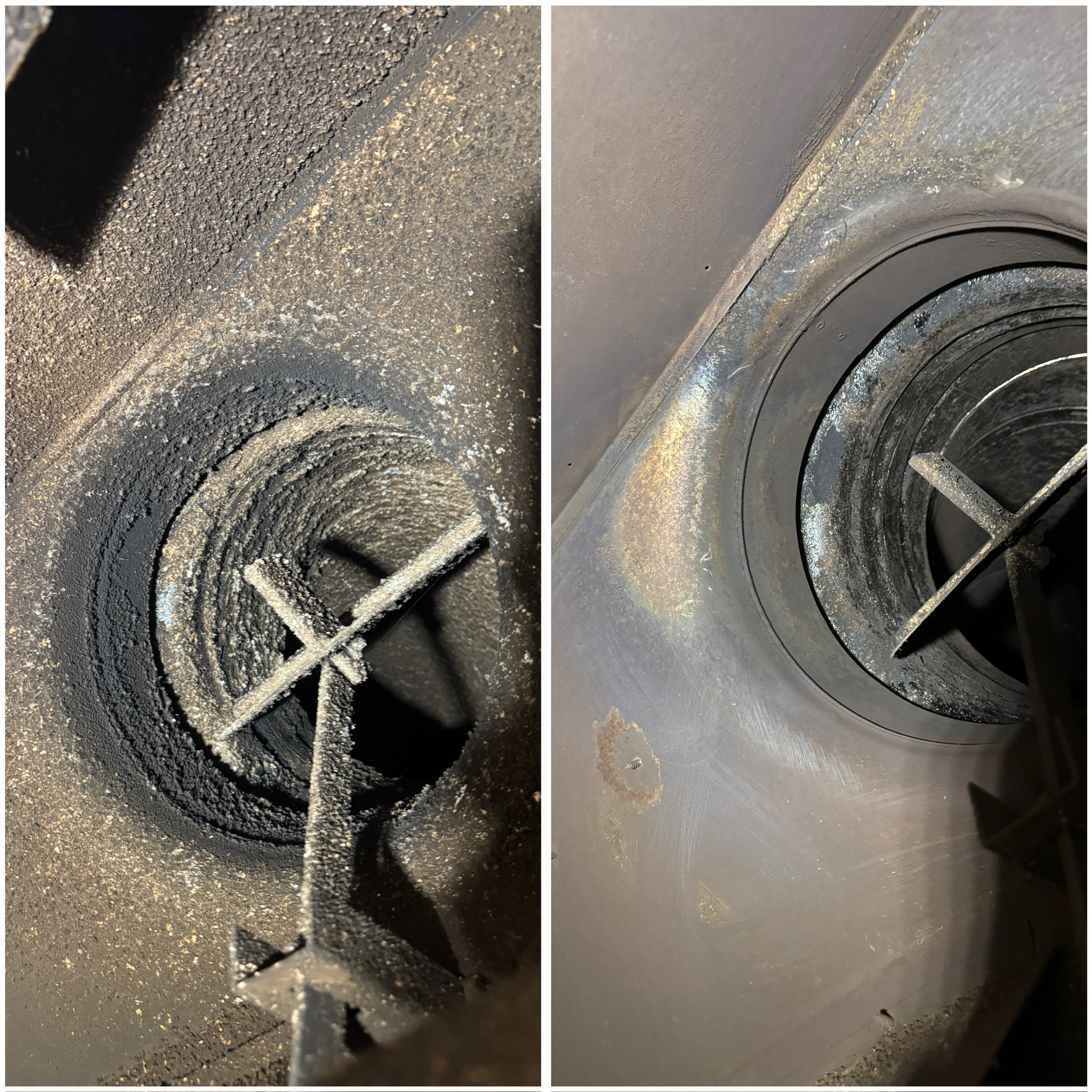
Every time you light a fire, the wood gives off smoke, gases, and tiny unburned particles. As all that travels up your cooler chimney, it condenses and sticks to the flue walls. That residue is creosote. It starts out as a light, flaky soot, but the more you burn (especially with damp wood or a smoky, low fire), the thicker and harder it gets.
People are often surprised to learn that creosote isn't just one thing. It shows up in different forms depending on how your fires have been burning.
The Three Stages You Should Know
First-stage creosote is a dusty, flaky black soot. It brushes off pretty easily and isn't the end of the world. Second-stage looks more like crunchy black flakes with a bit of shine, almost like cornflakes stuck to the wall. By the time you reach third-stage creosote, you're dealing with a hard, glazed, tar-like coating that almost looks shiny or wet. That glazed stuff is the dangerous one. It's highly flammable, hard to remove, and it's the kind that fuels serious chimney fires.
Why Creosote Is More Dangerous Than It Looks
The biggest risk is fire. Creosote is fuel, plain and simple. When enough of it lines your flue and the temperature climbs high enough, it can ignite. A chimney fire can roar like a freight train, crack your flue tiles, and in the worst cases spread into the walls and attic of your home. I've seen the aftermath, and it's not something you want to gamble with.
There's a quieter danger too. When creosote and soot build up, they narrow the opening that smoke and gases need to escape. That restriction can push carbon monoxide back into your living room instead of sending it out the top. Carbon monoxide has no smell and no color, and it makes people sick before they ever realize what's happening. A blocked or coated flue raises that risk every time you light a fire.
Our DFW Weather Plays a Part
Folks sometimes assume creosote is only a problem up north where people burn wood all winter. Not true. Around here we get those quick cold snaps where everybody fires up the fireplace for a few weeks, then the weather warms and the chimney sits unused. Those short, cool burns and long idle stretches actually encourage creosote to form and harden. Add in the moisture our humid spells bring, and you've got conditions that let buildup sneak up on you.
How to Spot Creosote Buildup Yourself
You don't need to be a pro to catch the early warning signs. Grab a flashlight and a small mirror, open your damper, and take a careful look up into the flue. If you see a black, crusty coating thicker than about an eighth of an inch, it's time for a cleaning. A shiny, tar-like glaze is your signal to stop using the fireplace until a tech takes a look.
Your senses help too. A strong, smoky, almost barbecue-like odor coming from the fireplace, especially in warm weather, often means creosote is sitting in there. If your fires seem harder to start, smoke drifts back into the room, or you notice dark staining around the firebox opening, those are all hints that your flue isn't venting the way it should.
What You Can't See From the Bottom
Here's the honest part. Even a careful homeowner can only see the very bottom of the flue. The buildup higher up, around the smoke shelf, and at any bends in the chimney stays hidden. That's exactly where dangerous glazed creosote loves to collect. A thorough professional chimney inspection uses cameras and the right tools to check the spots you'll never reach with a flashlight, so nothing gets missed.
Keeping Creosote Under Control
The simplest habit that helps is burning seasoned, dry hardwood. Wet or green wood smolders, throws off more smoke, and lays down creosote fast. Build hotter, brighter fires instead of slow smoky ones, and give your fire enough air to breathe.
Beyond good burning habits, the surest protection is a yearly cleaning. A professional chimney sweep removes the buildup before it reaches that hardened, hard-to-remove stage and gives you peace of mind every time you strike a match. Most chimney fires we respond to could have been prevented with one routine sweep.
If it's been more than a year since anyone looked inside your chimney, don't wait for the first cold front to find out the hard way. Our team would be glad to take a look and get you ready for the season, so reach out to schedule your appointment and we'll make sure your fireplace is safe to enjoy.
Creosote is one of those problems that stays quiet until it doesn't. A little attention now keeps your family warm, your air clean, and your home standing safe for many winters to come.