Chimney Cap Problems Most DFW Homeowners Miss
 AnastasiaJune 29, 20265 mins
On this page
Most folks never look at their chimney cap. It sits way up at the top of the flue, out of sight, doing a quiet job that nobody thinks about until something goes wrong. I get it. When you are standing in your driveway in Lakewood looking up at an older home with original masonry, the cap is the last thing on your mind. But after years of climbing roofs across Dallas, I can tell you the cap is where a surprising number of chimney problems start, and almost all of them are easy to miss from the ground.
Let me walk you through what I see most often, and why catching these early saves you a lot of money and headache.
Why the Cap Matters More Than You Think
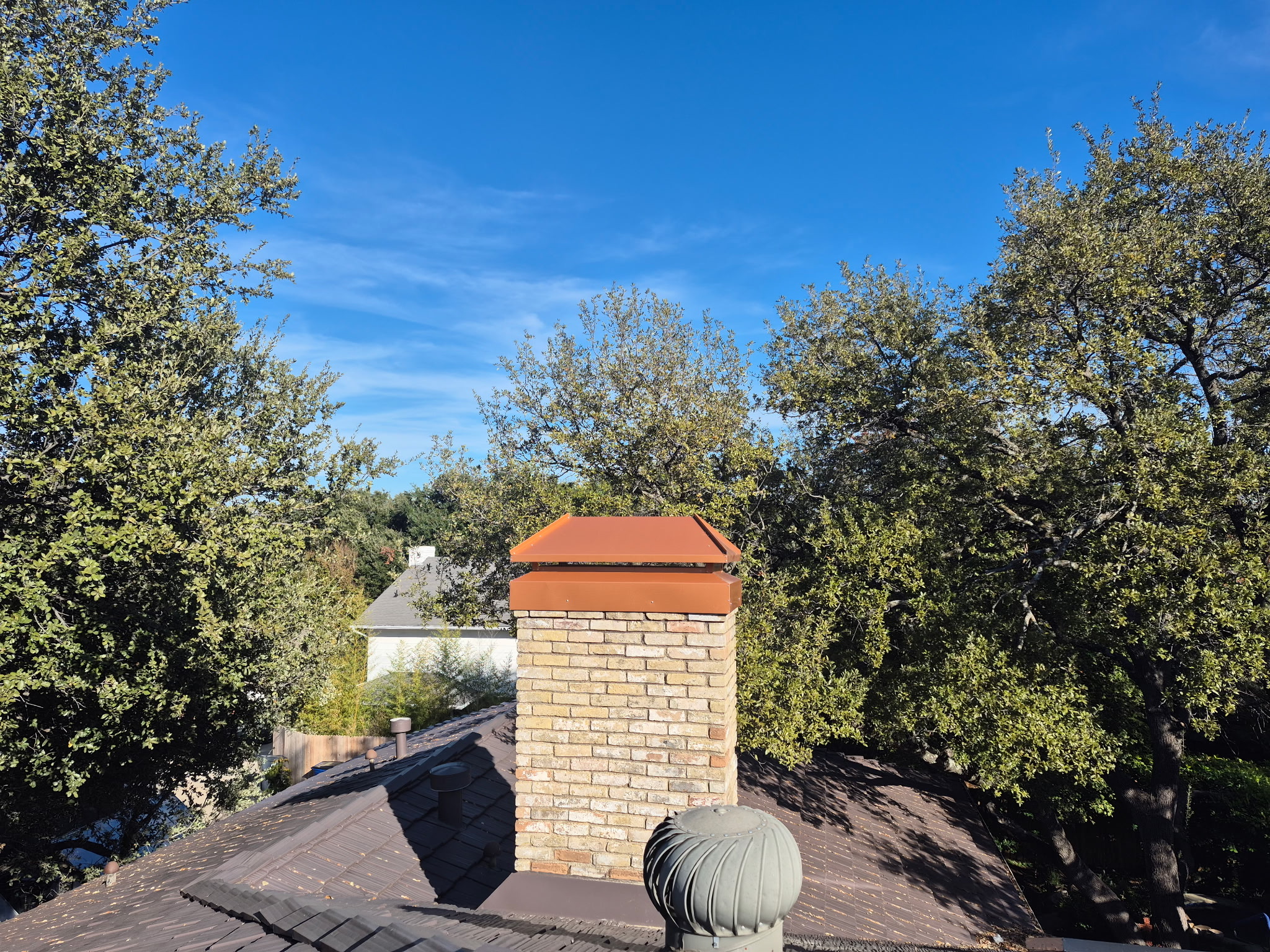
The chimney cap is a small metal or stainless steel cover that sits over the top of your flue. It does three big jobs. It keeps rain out, it keeps animals and debris out, and the mesh sides act as a spark arrestor so embers do not land on your roof. When the cap is doing its job, you never notice it. When it fails, water and critters get a free pass straight into the heart of your chimney.
Here in Dallas, the cap takes a beating. We get those wild swings from dry summer heat to sudden spring storms rolling in off the prairie, and that constant expansion and contraction is hard on metal and the mortar it sits on. Add the humidity that hangs around White Rock Lake and you have the perfect recipe for rust and corrosion over time.
The Problems Homeowners Almost Always Miss
Rust and a Failing Finish
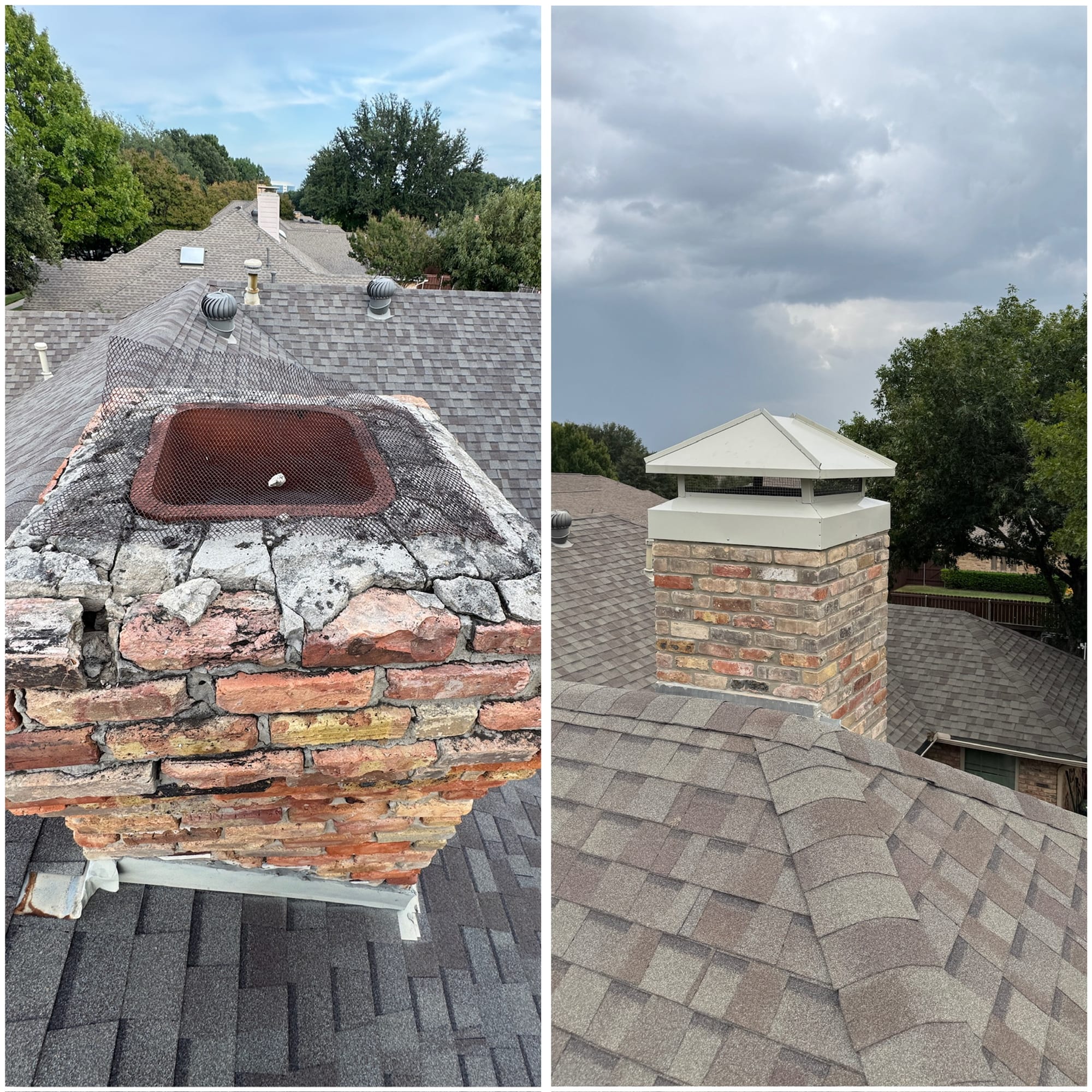
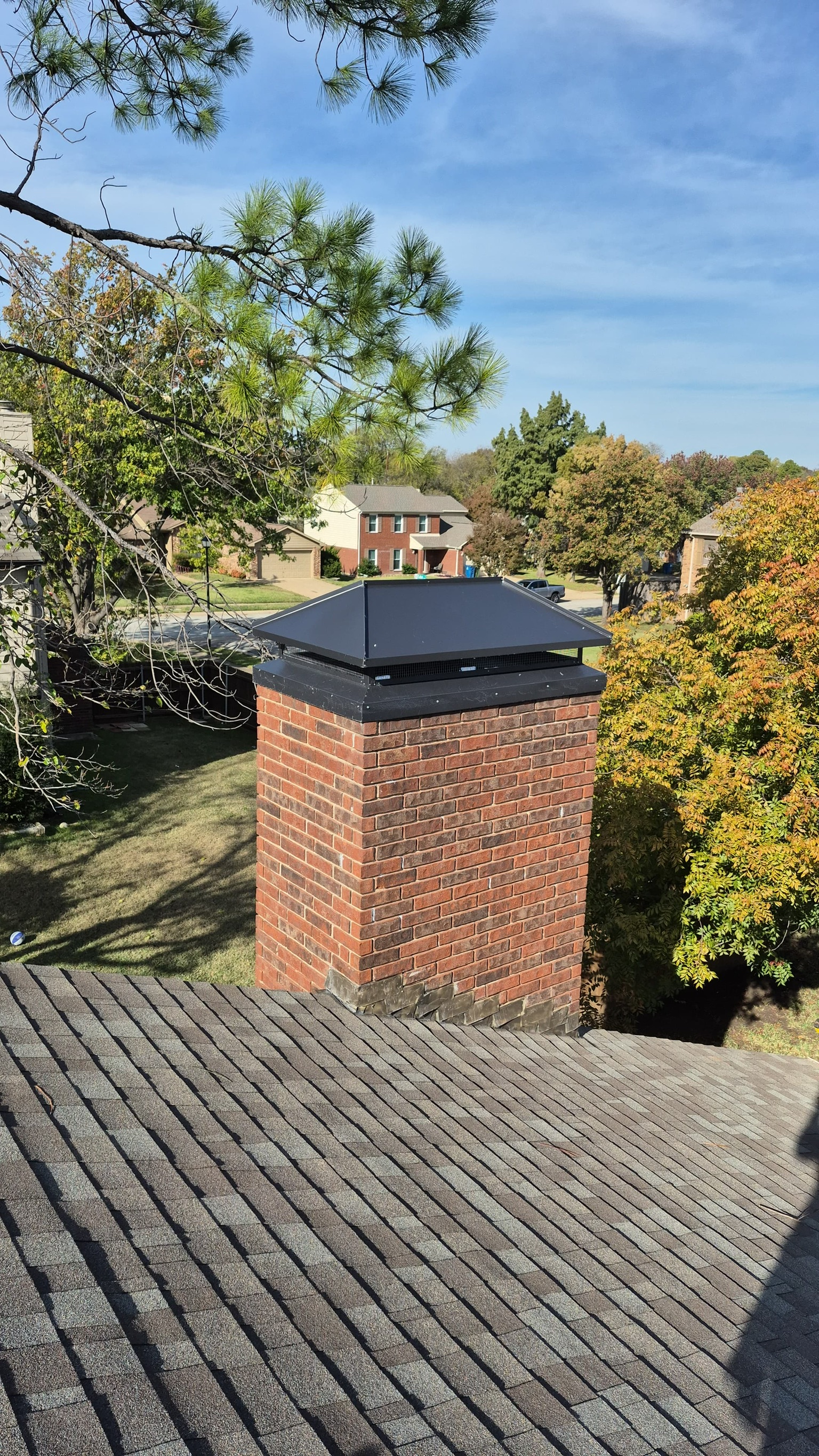
A cheap galvanized cap looks fine for the first few years. Then the finish starts to break down, rust bleeds down the side of the chimney, and you get those ugly orange streaks staining the brick. By the time you can see those streaks from the yard, the cap has usually been failing for a while. Rust eats through the metal, the cap loses its shape, and rain starts finding its way in. I always tell people to consider a stainless steel cap when it is time to replace, because it holds up to our Texas weather far better and you are not back up there in five years.
Damaged or Missing Mesh
The mesh screen on the sides is doing more work than people realize. When it gets torn, bent, or rusts away, you have basically left the door open. I have pulled birds, squirrels, and even a raccoon family out of flues in older Preston Hollow homes where the mesh had given out. Beyond the animal problem, damaged mesh means the spark arrestor is no longer protecting your roof, which is a real fire concern during burning season.
A Cap That Is Loose or the Wrong Size
This one slips past nearly everyone. A cap that was installed by a handyman or a previous owner is often the wrong size for the flue, or it was never fastened down properly. A few gusty days, the kind that come through Dallas in early spring, and that cap shifts or blows clean off. You would be amazed how many caps I find sitting crooked or half off when I get up on a roof. A loose cap is no better than no cap at all.
What Happens When You Ignore It
Here is the part that costs real money. When the cap fails and water gets in, it does not stay up top. It seeps into the masonry, soaks into the flue liner, and works its way down into the firebox and even the walls and ceiling of your home. Water is the number one enemy of any chimney. It freezes in those rare hard cold snaps, expands, and cracks the brick and mortar from the inside out. Before long a simple cap replacement turns into serious chimney repair involving the crown, the liner, and the masonry itself.
I have seen homeowners in the M Streets and over in Oak Cliff put off a hundred dollar cap fix only to face a much larger bill a couple of winters later. The chimney does not heal itself. Small leaks always grow.
How to Catch Cap Problems Early
You do not need to climb on your own roof, and honestly I would rather you did not. From the ground with a pair of binoculars you can spot a lot. Look for rust streaks on the brick, a cap that looks tilted or out of place, and any sign the mesh is torn or gone. If you notice a musty smell or hear scratching sounds when you are near the fireplace, those are warning signs that something is getting in from above.
The best move is a yearly inspection by someone who actually goes up and looks. We check the cap, the crown, and the flue all in one visit, and we can tell you whether a quality chimney cap needs replacing before it becomes a water problem inside your living room.
If it has been a while since anyone laid eyes on the top of your chimney, do not wait for the first storm of the season to find out the hard way. Reach out to our team and we will get up there, take a real look, and tell you straight what your cap needs. It is a small thing that protects a big investment, and I would rather catch it now than after the rain finds its way in.